

The Kogi State Livestock Productivity and Resilience Support (Kogi L-PRES) Project) has launched a Stakeholders Engagement and Sensitization program on Gender-Based Violence (GBV), Sexual Exploitation and Abuse (SEA), and Sexual Harassment (SH) for its contractors and service providers in Lokoja.
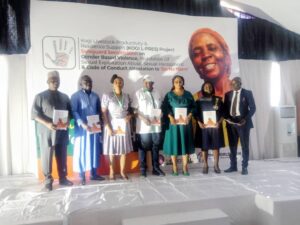 The programme, aimed at promoting responsible and ethical project implementation, emphasizes the project’s zero-tolerance policy for GBV, SEA, and SH in Kogi State.
In his welcome address, Mr. Abdulkabir Onuoroyoiza Otaru, State Project Coordinator (SPC), Kogi L-PRES, welcomed participants and highlighted the need and importance of the Stakeholders Engagement and Sensitization program as a key requirement under the L-PRES Project to address and ensure social safeguard across the Livestock Value Chain Clusters in Kogi State.
The SPC thanked and appreciated His Excellency Governor Ahmed Usman Ododo for creating the enabling environment and prompt payment of counterpart funding to support the implementation of L-PRES Project in Kogi State.
He emphasized the L-PRES project’s zero-tolerance policy for GBV, SEA, and SH, stating that contractors and service providers represent the project on the ground and directly impact the safety, dignity, and trust of the communities they serve.
The SPC emphasised that Contractors and service providers are expected to maintain professional and respectful behavior at all times, and avoid abuse of power or authority.
He added that they must ensure all workers understand and sign the Project Code of Conduct, prevent and report any form of exploitation, harassment, or violence, and treat community members with dignity, regardless of gender, age, or status.
The SPC emphasized the importance of the Do No Harm principle, requiring project activities to: not worsen existing community tensions, not marginalize women, youth, or vulnerable groups,
He further stressed the need not to create fear, intimidation, or social conflict, and don’t undermine trust between the Project and host communities
“The Project has established confidential and survivor-centered Grievance Redress Mechanisms (GRMs) to ensure that complaints related to GBV, SEA, or SH are reported safely and handled promptly,” Mr Otaru said.
Amb. Idris Ozovehe Muraina, Executive Director, Renaissance Care and Empowerment Foundation (RECEF), presented a paper on mainstreaming gender in livestock value chains, highlighting the need to address unequal roles, resources, and decision-making.
He defined the World Bank’s four primary domains of SEAH risks and emphasized the importance of prevention and response.
Amb. Muraina highlighted the importance of integrating gender analysis into livestock value chains to address unequal roles, resources, and decision-making.
He stressed that the project has developed a survivor-centered framework for reporting and responding to GBV, SEA, and SH complaints, prioritizing safety, confidentiality, dignity, and informed consent.
According to him, the framework includes multiple reporting channels, trained SEAH focal points, and referral pathways to support services.
Barr. Lilian Ajuma Okolo presented a paper on SGBV Case Management, emphasizing the need for timely, coordinated response and survivor-centered referral pathways.
Barr Okolo stressed that contractors and service providers have legal and ethical duties to do no harm and protect community members.
Dr Aisha Abimbola Adaranijo, Lecturer at Federal University Lokoja, stressed that safeguarding is everyone’s responsibility.
Dr. Atule Stanley, Director GBV, Kogi State Ministry of Justice, stressed the need for participants to abide by the sensitization.
Mr. Daniel Ibrahim Arome, Chairman Persons with Disabilities Association, commended the initiative and emphasized inclusivity.
A panel discussion highlighted practical steps for contractors to mainstream gender in their operations and ensure compliance with GBV, SEA, and SH policies.
The event featured the unveiling of the Kogi L-PRES Illustrative Handbook on Gender-Based Violence and PSEAH, and the signing of Code of Conduct Attestation by the Contractors.
Sarah Ojoma Amanabo, Gender/GBV Officer, Kogi L-PRES, appreciated participants and commended the SPC and staff for their support.