

PROFESSOR OF ANATOMY AND STRUCTURAL BIOLOGY DELIVERS PAAU’S 19TH INAUGURAL LECTURE
…Explores Brain Signals in Addiction and Chronic Pain Management
A Professor of Anatomy and Structural Biology, Professor Abayomi Ajayi has made a thought-provoking presentation on the role of tiny brain messengers in understanding addiction and chronic pain.
He made the presentation at the 19th Inaugural Lecture of Prince Abubakar Audu University, Anyigba, titled “Structures and Signals: How Tiny Brain Messengers Help Us Understand and Treat Addiction and Pain,” held on Tuesday, 19th May, 2026 at the University Auditorium, examining the scientific relationship between brain signalling, human behaviour, addiction and pain management.
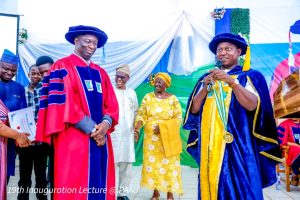 In his presentation, Prof. Ajayi explained that Anatomy and Structural Biology focus on the study of human structures from the whole organism to the molecular level, emphasizing their relevance in modern medicine, neuroscience and healthcare research.
He described neuropeptides as tiny brain messengers that regulate communication within the nervous system, influencing emotions, pleasure, memory, pain perception and behaviour.
In his words, “These signalling molecules play critical roles in addiction and chronic pain pathways.”
The inaugural lecturer identified key structures within the brain’s reward circuit, including the Ventral Tegmental Area (VTA), Nucleus Accumbens, Prefrontal Cortex, Amygdala and Hippocampus, explaining how they interact in the development of addiction and chronic pain conditions.
Prof. Ajayi noted that addiction remains a growing public health challenge in Nigeria, with increasing abuse of substances such as cannabis, tramadol and codeine, especially amongst young adults.
He added that the consequences included mental health disorders, crime, reduced productivity and increased healthcare burdens.
Drawing from his groundbreaking research on FMRFamide-related peptides (FaRPs) in Holothuria scabra, Prof. Ajayi demonstrated how those neuropeptides influenced dopamine release, pain modulation and neural signalling.
He further explained that his studies contributed to the identification of native FaRPs, SALMFamide precursor genes and the development of a cost-effective Dot Immunoblot Assay suitable for resource-limited laboratories.
Prof. Ajayi highlighted the therapeutic potential of neuropeptides in reducing addiction cravings, balancing pain signalling and protecting against memory dysfunction caused by drug abuse.
He emphasized that natural activities such as quality sleep and healthy exercise could stimulate beneficial neuropeptide production, thereby supporting mental and neurological wellbeing.
The inaugural lecturer further stressed the need for increased investment in Basic Medical Sciences, rehabilitation centres and interdisciplinary research aimed at addressing addiction and chronic pain challenges in Africa.
As part of his recommendations, Prof. Ajayi called on government to close the treatment gap in addiction management through improved healthcare policies and stronger rehabilitation systems.
He also advocated greater societal support for individuals struggling with addiction, whilst urging academics to remain committed to impactful teaching and research.
He described the Vice-Chancellor as an inspiration to him.
Prof. Ajayi, who has spent over two decades in academic service, was celebrated as the first Professor of Anatomy at Prince Abubakar Audu University, the first Professor from the Faculty of Basic Medical Sciences, the first Professor from the College of Health Sciences and notably, the first specialist in Anatomy and Structural Biology in Nigeria.
Earlier, the Chairman of the Inaugural Lecture Committee, Prof. Sunday Salifu Arogba, congratulated the inaugural lecturer on attaining the significant academic milestone.
He commended the Vice-Chancellor for his strong commitment to revitalizing the inaugural lecture series and restoring its place in the academic culture of the University.
Prof. Arogba reiterated the Management’s commitment to sustaining the inaugural lecture series on a biweekly basis as part of efforts to strengthen scholarship, intellectual engagement and academic excellence within the institution.
In his address, the Vice-Chancellor of the University, Professor Salisu Ogbo Usman, described the inaugural lecture as a major intellectual milestone and reaffirmed the University’s commitment to advancing scholarship, innovation and impactful research.
He noted that the lecture topic addressed critical global concerns surrounding addiction, mental health and chronic pain, emphasizing the importance of interdisciplinary collaboration in finding sustainable solutions to contemporary health challenges.
The Vice-Chancellor commended Prof. Ajayi for his outstanding academic contributions and groundbreaking research, noting that the lecture further reflected the University’s vision of promoting globally relevant scholarship and scientific innovation.
Prof. Usman also appreciated the Chairman and members of the Inaugural Lecture Committee for sustaining the intellectual culture of the institution through consistent organization of inaugural lectures.
Highlight of the inaugural lecture was the presentation of an inaugural lecture certificate and plaque to the lecturer and a cash prize of Five Hundred Thousand Naira (₦500,000.00) from the Provost of the College of Health Science as part of the reward system for lecturers who deliver inaugural lectures from the College.
The event attracted members of the academic community, Medical experts, students, stakeholders and distinguished guests from within and outside the University community.
Uredo Omale,
Public Relations Officer,
Prince Abubakar Audu University, Anyigba.