

KWASU Don Harps On Preservation Of Indigenous Cultural Heritage
Stephen Olufemi Oni, Ilorin
A Professor of Fine Arts and Art Education at the Kwara State University (KWASU, Malete), Binta Ajibola Sulyman, has stressed the need to preserve indigenous cultural heritage, noting that it plays a vital role in enhancing community cohesion and sustaining peace within society.
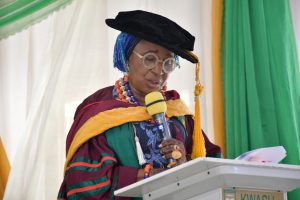 Professor Sulyman made the submission on Wednesday, during the 21st Inaugural Lecture of Kwara State University, titled ‘The Ilorin Royal Dance Tradition
(Ijo Olomo Oba): A Catalyst for Cultural Identity, Artistic Expression, and Creative Economy”.
Professor Sulyman highlighted the connection between fine arts and traditional performative dance, stressing the sustainability of Ijo Ọlọ́mọ Ọba, a traditional dance deeply rooted in the cultural identity of the Ilorin people.
Declining youth participation, poor documentation, inadequate institutional support, and the increasing dominance of Western cultural forms were some factors the inaugural lecturer attributed to the perception of traditional arts as outdated, thus placing valuable cultural heritage at risk of extinction.
She argued that preserving cultural traditions does not require resistance to modernisation but rather a careful integration of traditional values with contemporary realities.
Such an approach, she noted, would enable cultural practices to remain relevant to younger generations while retaining their historical significance.
Professor Sulyman also stressed the importance of incorporating indigenous music and performative arts into educational curricula, recommending that Nigerian schools give greater attention to teaching and performing traditional musical forms from ethnic traditions in Nigeria.
She noted that education remains one of the most effective tools for transmitting cultural knowledge across generations that fosters a sense of identity and belonging among young
Beyond cultural preservation, the scholar linked indigenous arts to peacebuilding and social development. She explained that cultural performances such as Ijo Ọlọ́mọ Ọba strengthen social cohesion, promote intergenerational dialogue, and reinforce shared values that contribute to peaceful coexistence within communities.
She observed that cultural heritage serves as a unifying force capable of bridging social divides and fostering mutual understanding among diverse groups, making it an important resource for community development and nation-building.
Professor Sulyman called for a holistic approach involving education, innovation, community participation, and institutional support to ensure the sustainability of Ijo Ọlọ́mọ Ọba. She expressed optimism that with deliberate preservation efforts, the dance would not only survive but also gain wider national and international recognition as a significant component of Nigeria’s rich cultural heritage.