

KWASU Unveils Gender Studies Centre
* Pushes digital Inclusion for women, vulnerable groups
Stephen Olufemi Oni, Ilorin
The Kwara State University (KWASU), Malete, has intensified its drive for gender equity and inclusive development with the launch of its Centre for Gender Studies, as scholars and development experts called for greater digital inclusion and protection for women in Nigeria’s rapidly evolving digital landscape.
T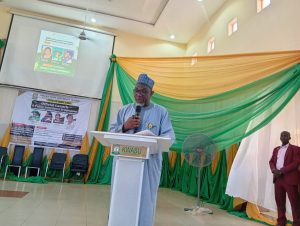 he launch, held alongside a public awareness symposium at the university’s Mini Convocation Arena, brought together academics, researchers, policymakers and stakeholders from across the country to discuss strategies for advancing gender equality through education, research and digital empowerment.
Speaking at the event, the Vice Chancellor of KWASU, Professor Shaykh-Luqman Jimoh, described the establishment of the centre as a major step in the university’s commitment to scholarship, inclusiveness and social transformation.
“Today marks another important milestone in the advancement of our University. The establishment and formal launch of the Centre for Gender Studies reflects our commitment to scholarship and inclusiveness,” he said.
Professor Jimoh explained that the centre would serve as a platform for research, advocacy, capacity building and policy engagement on gender-related issues, while promoting a more inclusive society.
 He noted that universities have a responsibility to address societal challenges through knowledge generation, policy influence and community engagement, adding that KWASU has consistently provided opportunities for both men and women to excel.
“At Kwara State University, we remain committed to gender equity and inclusion. We continue to provide an enabling environment where men and women can excel in their careers and contribute meaningfully to the growth of the University and society at large,” he stated.
The Vice Chancellor highlighted the contributions of women in leadership and administrative positions within the institution, saying their achievements reflected competence and professionalism.
According to him, the new centre aligns with the university’s broader efforts to empower women and vulnerable groups through entrepreneurship, skills acquisition and economic empowerment programmes coordinated by its Women Development Centre.
Professor Jimoh also described the symposium’s theme, “Gender, Digital Literacy and Sustainable Development: Interrogating Pathways to Inclusion,” as timely, noting that many women and vulnerable groups still face barriers to accessing digital opportunities.
“We live in a world where digital technology shapes access to information, education, employment and participation in public life. Yet many people, especially women and other vulnerable groups, still face challenges in accessing digital opportunities and developing digital skills,” he said.
He urged scholars and policymakers to develop practical solutions that would strengthen digital inclusion and sustainable development.
Earlier, the Acting Director of the Centre for Gender Studies, Dr. Latifat Kehinde Olatinwo, said the centre was established to advance scholarship, innovation, inclusivity and national development through a gender-focused approach.
“Today’s launch is significant in the annals of our university as we gather to inaugurate a centre that is designed to use a gender lens to contribute meaningfully to scholarship, research, innovation, community engagement, inclusivity and national development,” she said.
Olatinwo disclosed that the journey to establishing the centre was challenging but successful due to the support of the university management and members of the planning committee.
She also paid tribute to the late Pro-Chancellor and Chairman of the Governing Council, Professor AbdulGaniyu Ambali, whose death occurred shortly before the event.
“The painful loss has left our university community in mourning. His passing has left a major vacuum in the life of this university,” she said.
The Director expressed optimism that the centre would emerge as a hub for research, policy development, capacity building and strategic partnerships aimed at promoting gender mainstreaming within and outside the university community.
Delivering the keynote address, Professor Janice Olawoye warned that the persistent gender gap in digital access and meaningful digital participation continues to deny many women opportunities in the digital economy.
She described digital literacy as an essential tool for communication, commerce, information access and online safety.
“Digital literacy is necessary for the correct and effective use of various digital platforms. It helps people stay in contact with others, pass information in a timely manner, buy and sell goods and services, and prevent them from being taken advantage of online through email fraud, phishing and photo manipulation,” she said.
Professor Olawoye stressed that closing the gender gap in digital access is critical to achieving sustainable development, urging governments, institutions and development partners to adopt policies that ensure equal opportunities for all.
“The gender gap in digital access is accompanied by a gender gap in meaningful digital use, limiting women’s access to the full range of opportunities offered by digital services,” she stated.
Also speaking, Lagos State University lecturer and gender expert, Dr. Olawunmi Cordilia Macaulay-Adeyelure, called for stronger digital safety measures to protect women and vulnerable groups from online harassment.
“Stakeholders should establish and enforce digital safety standards, including effective mechanisms for reporting and addressing online harassment,” she said.
She urged technology firms and public institutions to adopt inclusive design models that involve women from different social and economic backgrounds in developing digital platforms.
Macaulay-Adeyelure further argued that digital inclusion should not be measured solely by access to devices and internet connectivity but by outcomes that demonstrate empowerment and opportunities.
“Evaluation needs to move beyond counting devices and connections to tracking outcomes that actually reflect capability,” she said.
She identified women’s participation in digital employment, civic engagement and control over income generated through digital opportunities as key indicators of meaningful inclusion.
The launch of the Centre for Gender Studies is expected to strengthen research, advocacy and policy engagement on gender-related issues while supporting efforts to promote equality, digital literacy and sustainable development in Nigeria.