

The Kogi State Government has reiterated its commitment to promoting inclusivity and safeguarding the rights of persons with disabilities, particularly the deaf community, as it declared open the 3rd Edition of the North Central Association of the Deaf (NCAD) Zonal Conference.
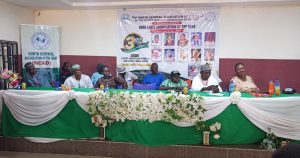 The State Head of Service, Falilat Yusuf Musa, made this known in a speech delivered on her behalf by the Permanent Secretary, Head of Service Office, Aisha Mohammed, at the formal opening ceremony of the conference.
Describing the occasion as a privilege, the Head of Service extended warm greetings to participants and expressed appreciation to the leadership of the North Central Association of the Deaf (NCAD), particularly the Zonal Chairman, Abubakar Labaran, for the invitation.
She commended the theme of the conference, “Protect, Promote and Recognize Deaf People’s Human Rights,” noting that it aligns with the Kogi State Government’s commitment to inclusive governance and the protection of the rights of all citizens, especially persons with disabilities.
“The Kogi State Government remains resolute in its efforts to promote accessibility, equal opportunities, and the full integration of deaf persons and other persons with disabilities into all aspects of society, including education, employment, healthcare, and public service,” the statement read.
The government also praised NCAD for its consistent advocacy and awareness campaigns aimed at improving the welfare of deaf persons across the North Central zone, noting that such efforts continue to make meaningful impact.
The Head of Service urged participants to actively engage in deliberations, share innovative ideas, and develop practical strategies to further strengthen the rights and opportunities available to deaf persons in society.
She thereafter formally declared the 3rd Edition of the NCAD Zonal Conference open, expressing optimism that the outcomes of the conference would advance the cause of inclusivity and human rights for the deaf community.
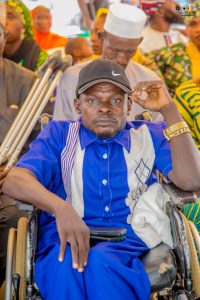 In his speech the Executive Secretary of the Kogi State Office for Disability Affairs, Hon. Yakubu Nazir Abdulhakeem, described the conference as a vital platform for advancing the cause of Deaf persons and strengthening advocacy for their inclusion in all aspects of society.
Hon. Abdulhakeem noted that the gathering was not merely ceremonial but a call to action for equity, justice, and inclusion of Deaf individuals, stressing that their rights must be respected and upheld at all levels.
“The Deaf community remains one of the most vibrant and resilient groups in our society. However, many still face barriers in accessing quality education, healthcare, employment, information, and justice,” he said.
According to him, such challenges stem not from inability but from systemic shortcomings and societal limitations that require collective action to address.
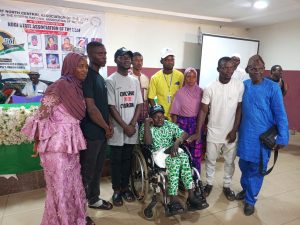
The Executive Secretary reaffirmed the agency’s commitment to safeguarding the rights of Deaf persons by ensuring protection against discrimination, exclusion, and abuse, while also promoting access to opportunities through inclusive policies and services.
He emphasized the need to recognize sign language as a legitimate means of communication and to appreciate Deaf culture and identity, adding that Deaf persons must be actively involved in decisions affecting their lives.
Hon. Abdulhakeem commended the Kogi State Governor for his administration’s commitment to the welfare of persons with disabilities, noting that the state continues to set a pace in inclusiveness.
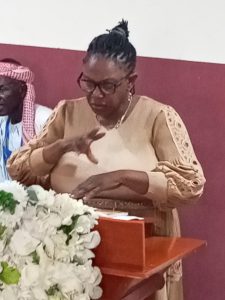
The Chairperson of the Kogi State Association of the Deaf (KSAD), Achamajah Ozichu Joy in her welcome address called for renewed commitment to the protection, promotion, and recognition of the rights of Deaf persons across Nigeria.
While welcoming delegates from across the North Central region, Ozichu described their presence as a demonstration of a shared commitment to advancing the welfare, inclusion, and rights of Deaf people nationwide.
She noted that the theme of the AGM, “Protect, Promote, and Recognize Deaf People’s Human Rights,” underscores the collective responsibility of governments, institutions, and stakeholders to ensure equal opportunities, accessibility, and respect for the dignity of Deaf persons.
Highlighting the slogan of the event, “Celebrating Identity, Culture, and Rights,” the KSAD chairperson emphasized the richness of Deaf culture and the importance of sign language as a vital tool for communication and identity.
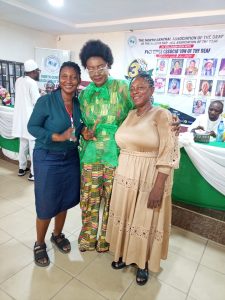
Ozichu urged participants to use the platform of the AGM to strengthen unity within the Deaf community, exchange ideas, and develop strategies aimed at addressing common challenges and advancing empowerment.
She also commended the Kogi State Government, the Kogi State Disability Commission, the Joint National Association of Persons with Disabilities (JONAPWD), the Nigeria National Association of the Deaf (NNAD), as well as development partners and sponsors for their continued support toward the growth of the Deaf community.
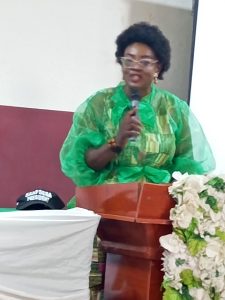
In her keynote address, the Executive Director of Challenged Parenthood Initiative (CPI), Eunice Abimbola Agbogun, said the conference was not just a gathering but a reminder of the need to build an inclusive society where deaf persons are fully recognised, empowered, and given equal opportunities.
Agbogun highlighted the everyday challenges faced by deaf individuals, particularly in education, healthcare, and access to justice, stressing that exclusion often stems from society’s failure to communicate effectively.
She illustrated this with the example of a deaf child in a classroom who, despite being present, is unable to participate due to lack of sign language support, saying “Human rights begin when a deaf child can understand the teacher, when a deaf patient can communicate in a hospital, and when a qualified deaf graduate is judged by competence, not disability,”
According to her, the major barrier confronting deaf persons is not their condition but societal limitations, including poor attitudes, lack of inclusive policies, and inadequate infrastructure and urged stakeholders to reflect on critical questions regarding inclusivity in schools, courts, workplaces, and public institutions, noting that true inclusion goes beyond rhetoric.
She tasked government institutions to strengthen inclusive policies, while educational institutions were urged to prioritise sign language and inclusive learning systems.
The CPI Executive Director further called on civil society organisations, families, and communities to play active roles in advocacy, awareness, and support for deaf persons.