

Leadership is not merely about occupying a position of authority; it is about having the vision, courage and commitment to translate ideas into meaningful results. As Warren Bennis aptly observed, “Leadership is the capacity to translate vision into reality.”
Since assuming office as the Provost and Chief Executive Officer of the Federal College of Education, Okene, on 29th September 2025, Dr. Ibrahim Ismaila Mosimabale has demonstrated a leadership style characterised by focus, diligence, courage, inclusiveness and a strong commitment to results.
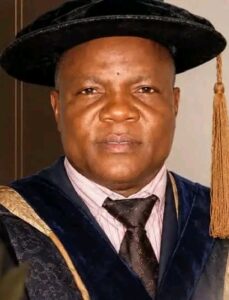 One year in office provides an appropriate opportunity to reflect on the journey so far, celebrate the milestones achieved, acknowledge the challenges encountered and appreciate the renewed sense of purpose that has become evident across the College community.
Under his administration, Federal College of Education, Okene has witnessed significant developments in infrastructure, staff welfare, security, academic advancement, institutional partnerships, community relations and administrative reforms.
A LEADERSHIP OF VISION AND PURPOSE
From the outset, the administration of Dr. Mosimabale has been driven by a clear understanding that the growth of the College requires collective responsibility. His administration has therefore sought to reposition the College as an institution in which management, staff, students, unions, stakeholders and the host community have a shared stake.
One of the remarkable achievements of the administration has been the deliberate effort to change the mindset of staff towards the College. Staff have increasingly been encouraged to see Federal College of Education, Okene not simply as a place of employment, but as their institution, one that deserves to be nurtured, protected and developed.
This renewed sense of ownership has contributed to a more positive institutional atmosphere and strengthened the determination to collectively move the College forward.
PEACE, SECURITY AND A SAFE COLLEGE ENVIRONMENT
Recognising that meaningful academic and administrative activities can only thrive in a peaceful and secure environment, the administration has placed considerable emphasis on security.
Among the initiatives is the installation of Closed-Circuit Television (CCTV) cameras in the Administrative Building and other strategic parts of the College to strengthen surveillance and improve security consciousness.
The administration has also engaged relevant authorities towards the establishment of a Police Post within the College community, while other security outfits in the College have been reorganised and strengthened.
These efforts demonstrate the administration’s commitment to creating a safe environment for staff, students, visitors and other members of the College community.
STAFF WELFARE AS A PRIORITY
A productive institution is built on motivated and valued employees. The Mosimabale administration has therefore continued to place staff welfare high on his agenda.
Among the welfare interventions recorded is the payment of 7.5% third-party deductions and the payment of 15 months of peculiar allowance from outstanding arrears which was inherited.
Beyond financial considerations, the administration has promoted a culture of consultation, engagement and cooperation with staff and the various trade unions. The relationship between the College management and the unions has remained cordial, creating an atmosphere conducive to dialogue and institutional development.
EXPANDING PARTNERSHIPS AND MOBILISING EXTERNAL SUPPORT.
One of the defining features of the administration has been its aggressive pursuit of partnerships, interventions and support from government agencies, development organisations and other stakeholders.
The administration has reached out to several organisations for assistance in critical areas of College development, some of ths agency include the North Central Development Commission, which have provided two solar boreholes in the College.Others include requests for:
Solar energy installation from the Energy Commission. That has since provided the panels for solar farm
Solar street lighting from the Rural Electrification Agency. This also have been actualized, with the donation of over 50 solar powered street lights.
Computers from the National Information Technology Development Agency (NITDA).
Computers and tablets from the Nigerian Communications Commission (NCC).
Laboratory equipment from the National Institute for Science and Laboratory Technology (NISLT).
Hospital equipment from the Federal Ministry of Health.
Fencing and ecological interventions from the Federal Ministry of Environment.
Support for the construction of a modern Administrative Building from the Central Bank of Nigeria (CBN).
Skill acquisition support from the Industrial Training Fund (ITF).
Agricultural tools from the National Agricultural Quarantine Service (NAQS).
Research and training grants from the United Nations Development Programme (UNDP).
Special intervention funding for educational infrastructure from the Nigerian Midstream and Downstream Petroleum Regulatory Authority (NMDPRA).
Support from the North Central Development Commission for the construction of a 5,000-capacity hall, perimeter fencing, a solar-powered borehole and hostels. Interestingly, contract for perimeter fencing has been awarded by Tetfund.
These initiatives reflect an administration determined to look beyond internally generated resources and strategically build partnerships capable of accelerating the development of the College.
INVESTING IN SUSTAINABLE TRANSPORTATION
In recognition of the increasing cost of transportation, discussions are ongoing towards converting some of the College buses to Compressed Natural Gas (CNG) and electric vehicles. The initiative has began to yield fruits, as two buses have been converted.
The initiative is expected to reduce transportation costs and contribute to a more sustainable and economically friendly transportation system for staff and students.
STRENGTHENING STAFF CAPACITY
Human capital development has also received attention under the present administration.
A significant milestone was the securing of a TETFund conference opportunity for forty non-teaching staff, providing them with opportunities for professional development, exposure and capacity building.
Such initiatives reinforce the administration’s belief that institutional transformation is impossible without investing in the people who drive the institution.
ADVANCING THE ACADEMIC MANDATE OF THE COLLEGE
Perhaps one of the most significant academic milestones recorded during the period was the successful hosting of the National Universities Commission (NUC) resource verification team for the College’s degree programmes under its dual mandate.
The successful resource verification process subsequently paved the way for the approval of degree programmes by the NUC, representing a major step forward in the academic evolution and expansion of Federal College of Education, Okene.
This achievement has further positioned the College to broaden its academic offerings and strengthen its contribution to teacher education and national development.
HISTORIC TOUR OF THE COLLEGE
In his determination to understand the institution from the grassroots, the Provost undertook tours of the various Schools, Directorates, Departments, Units and Sections of the College.
These visits provided the management with first-hand information about the operations, needs, achievements and challenges of different components of the institution.
The approach has helped to bring management closer to staff and has reinforced the principle that effective leadership requires listening, observation and direct engagement with those who work at the operational level.
ADMINISTRATIVE REFORMS AND INSTITUTIONAL GOVERNANCE
The administration has also embarked on important reforms aimed at strengthening governance and improving efficiency.
Three strategic committees were constituted, namely the:
Elders Advisory Council (EAC);
Transition Committee; and
Beautification Committee.
The administration also created the offices of two Deputy Provosts and successfully conducted elections into the offices. Elections into the offices of the Deans of Schools were also conducted.
These steps have contributed to broader participation in the governance of the College and strengthened the institutional framework for effective administration.
WORKING TOWARDS IMPROVED FINANCIAL AND BANKING SERVICES
The administration is also working towards introducing a banking system within the College, with the objective of making banking services more accessible to staff and students and reducing the difficulties associated with accessing banking facilities outside the College.
When fully implemented, the initiative is expected to enhance convenience and contribute to the modernisation of administrative and financial services within the institution.
LINKING THE COLLEGE TO 33KVA POWER LINE
The has initiated concerted effort to connect the College to 33KVA powered line. This is expected to boost academic research and other academic activities on campus.
STRENGTHENING COMMUNITY RELATIONS
The administration understands that an institution cannot operate in isolation from its host community. Consequently, efforts have been made to strengthen relations between the College and the surrounding communities.
Courtesy visits to traditional rulers have provided opportunities for the College to deepen relationships with community leaders, receive royal blessings and secure assurances of continued support.
The administration has been able to harmonising differences among various groups within the immediate community in order to promote unity, peaceful coexistence and sustainable development.
INFRASTRUCTURAL RENEWAL: A NEW FACE FOR THE COLLEGE
Perhaps the most visible manifestation of the administration’s developmental agenda is the extensive infrastructure renewal taking place across the College.
Several projects are ongoing or have been initiated to improve teaching, learning, administration, accommodation, sports and the general aesthetics of the institution.
These include:
Construction of the Guidance and Counselling Building.
Construction of an Olympic-standard basketball court with four pavilion stands.
Renovation of PHE Halls A and B, including toilets, external works and solar street lighting.
Renovation of the Music Block, including external works, car park and solar street lighting.
Renovation of the BED Block, including external works and solar lighting.
Renovation of underground classrooms, including external works and solar lighting.
Renovation of the Arts and Social Science Auditorium, including external works and solar lighting.
Renovation of the 200-capacity twin auditorium, including external works.
Construction of external works to an existing eight-classroom block.
Construction of external works to existing Chief Lecturers’ offices.
Construction of external works to an existing Crop Science Laboratory.
Completion of 36 lecturers’ offices, including furniture, external works and solar lighting.
Construction of a 250-capacity auditorium, complete with furniture and external works.
Construction of the Registry, Examinations and Directorate of Examinations Block, including furniture, car park and solar street lighting.
SPECIAL PROJECTS
The administration has also recorded progress on special projects, including:
Construction of the Convocation Square, including external works.
Construction of the 36 Lecturers’ Offices Complex, including external works and solar lighting.
These projects represent more than physical structures. They constitute investments in the academic, administrative and social future of the College
.
A CULTURE OF COLLECTIVE LEADERSHIP
One of the remarkable features of Dr. Mosimabale’s administration is the emphasis on collaboration.
The cordial relationship between management and trade unions, staff groups and other organisations within the College has created opportunities for dialogue and shared responsibility.
The administration has demonstrated that institutional progress is best achieved when leadership is participatory and when members of the College community are encouraged to contribute ideas, identify challenges and participate in finding solutions.
ONE YEAR OF IMPACT.ONE YEAR OF HOPE.
After one year in office, the leadership of Dr. Ibrahim Ismaila Mosimabale can be described as a journey of purposeful transformation.
From strengthening security and staff welfare to pursuing external interventions; from advancing the academic mandate of the College to undertaking extensive infrastructural renewal; from strengthening community relations to improving internal governance, the administration has demonstrated a commitment to moving the Federal College of Education, Okene to a higher level of institutional excellence.
The journey is, however, far from over. The achievements of the first year provide a foundation upon which greater accomplishments can be built.
As the College looks towards the future, the expectation is that the administration will continue to consolidate the gains already recorded, complete ongoing projects, attract more interventions, strengthen academic excellence, improve staff welfare and position the institution as a leading centre of teacher education, innovation and human capital development.
In conclusion,one year in leadership is both a milestone and a call to greater service. For Dr. Ibrahim Ismaila Mosimabale, the first year has been characterised by vision, courage, engagement, institutional renewal and a determination to deliver results.
The story of the past year is therefore not simply the story of one administrator. It is the story of a College community working towards a shared vision.
As the Federal College of Education, Okene celebrates this milestone, the message is clear: the journey of transformation has begun, the foundation is being strengthened, and the future holds even greater possibilities.
One year of dynamic leadership.
One year of purposeful service.
One year of institutional transformation.
One year of greater possibilities.
Congratulations to the Provost, Dr. Ibrahim Ismaila Mosimabale, and the entire Federal College of Education, Okene community on this remarkable one-year anniversary.
Jibril Abdulrahaman ANIPR,
Director of Information and Public Relations,
Provost’s Office
Federal College of Education, Okene.
28/9/2026