
Kwara 2027: PDP Guber Candidate Unveils ₦40bn Regional Devt Plan
Stephen Olufemi Oni, Ilorin
The Kwara State governorship candidate of the Peoples Democratic Party (PDP), Engr. Sulaiman Bolakale Kawu, has proposed a ₦40bn regional development agency to drive infrastructure and grassroots development across the state if given the mandate in the 2027 general elections.
 Kawu also promised to provide at least ₦5bn in counterpart funding for donor-supported development projects over four years, saying his administration would prioritise equitable distribution of infrastructure and essential services across the state’s 16 local government areas.
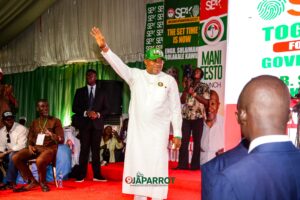
The former senior civil servant unveiled the proposals on Thursday in Ilorin, the state capital, during the public presentation of his manifesto, tagged “The SBK Compact – Kwara People First”.
According to him, the proposed ‘One Kwara Regional Development Agency’ would complement a grassroots development initiative under which each of the state’s 193 wards would receive ₦50m within the first 100 days of his administration.
The ward-based intervention, which amounts to an initial commitment of ₦9.65bn, he added, would allow communities to identify and determine projects based on their most pressing needs.
“Under this initiative, development projects will originate directly from the various wards. Communities will identify and choose their most pressing needs, propose projects and participate in their implementation,” Kawu said, adding that the projects would be subjected to transparency and accountability measures, including technical supervision to ensure value for money.
The PDP governorship candidate said his development agenda was informed by his experience in project planning and management, particularly his years of service at the Rural Electrification Agency, where he worked on projects aimed at improving access to electricity in rural communities.
“I have been groomed all these years of my career in project planning, management, transparent procurement, quality control and effective maintenance,” he said.
Kawu said his administration would not measure development by the number of projects commissioned but by their impact on residents.
“We will not measure development merely by the number of projects commissioned but by the number of people whose lives are improved by them,” he said.
He explained that the infrastructure programme would focus on roads connecting communities to markets, schools, hospitals and economic centres, as well as rural electrification, renewable energy, solar-powered streetlights and access to clean water.
The governorship candidate also pledged to give qualified indigenous contractors consideration in the award and execution of government projects, provided they met the required standards.
According to him, the policy would help retain government investments within the state, strengthen local businesses, create employment and develop local technical capacity.
On agriculture, Kawu proposed a state-supported production fund of at least ₦19.2bn to provide affordable financing and improved inputs to farmers and cooperatives.
He said the initiative would address challenges relating to access to finance, modern farming techniques, storage facilities, processing opportunities and access to markets.
The PDP candidate also proposed two revolving loan schemes of ₦9.6bn each for market traders and micro, small and medium-scale enterprises, with the latter operating at single-digit interest rates.
He further promised to establish a ₦3bn Women Enterprises and Empowerment Fund to support women-owned businesses, while at least 1,000 artisans would benefit from business support grants annually.
On employment, Kawu pledged to create 200,000 youth employment opportunities and 5,000 enterprise opportunities every year through vocational training, digital skills development, entrepreneurship support and partnerships with private employers.
“Our young people are not a problem to be managed. They are an enormous resource waiting for the right opportunities,” he said.
The governorship candidate also outlined a security funding plan involving the establishment of a ₦100bn Security Trust Fund to finance intelligence-led operations, strengthen community partnerships and provide better equipment for security agencies.
He said his decision to prioritise security was reinforced by his visit to Woro community in Kaiama Local Government Area, where he witnessed the aftermath of attacks.
“One of the most painful experiences in my entire life was my visit to Woro community in Kaiama Local Government Area of our state. I stood before the destruction. I saw blood on the ground. I witnessed firsthand the pain and fear of a traumatised community,” he said.
He added, “As Governor, I will not rest or sleep when the life of any Kwaran is under threat.”
On education, Kawu promised to commit ₦4bn to a special monthly hardship allowance for teachers serving in underserved, rural and hard-to-reach communities.
He also pledged to rehabilitate dilapidated schools, provide teaching materials, improve teachers’ welfare and expand technical and vocational education.
In the health sector, he promised to strengthen primary healthcare facilities across the 16 local government areas, improve access to essential medicines and introduce special allowances for qualified health workers serving in underserved communities.
The former civil servant also pro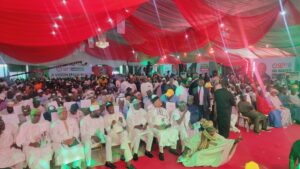 mised to introduce a 13th-month salary for all civil servants in the state, assuring workers of prompt payment of salaries and other entitlements.
“As a retired public servant myself, I understand the sacrifices, expectations and challenges of workers. I will ensure the prompt and timely payment of salaries and other entitlements. Workers must not have to struggle or beg for what they have lawfully earned,” he said.
He further promised to address outstanding pension and gratuity obligations through a transparent repayment framework, with an estimated ₦4bn increase in payments over four years.
Kawu said the proposed programmes would be implemented through responsible planning and budgeting, efficient resource mobilisation, effective government systems, transparency and citizen participation.
“A manifesto must be more than a collection of attractive promises. It must be a realistic programme of government supported by clear goals, responsible financing, competent implementation and measurable outcomes,” he said.