

Professor Yakubu Aboki Ochefu has called on Nigerian universities to move beyond the traditional practice of producing graduates for jobs that may no longer exist and reposition themselves as centres of innovation, research and practical solutions to societal challenges.
 Ochefu, a Professor of African Economic History and Development Studies, stated this on Thursday while delivering the 10th Convocation Lecture of the Federal University Lokoja, titled “The Confluence Generation: The University, the Graduate and the Society That Must Become Our Laboratory.” held at Felele campus of the institution.
According to him, Nigerian universities must move beyond knowledge storage to become engines of innovation and development
He described the disconnect between Nigerian universities and the society they serve as a major challenge to national development, noting that both institutions had operated side by side without meaningful interaction for much of the country’s history.
According to him, while universities remain preoccupied with academic calendars, Senate meetings, journals and graduation ceremonies, society is confronted with pressing challenges such as flooding, unemployment, market instability, traffic congestion and hunger.
He said graduates occupy a critical position where the two seemingly disconnected streams must meet, stressing that universities must begin to see the immediate environment as a laboratory for research, innovation and problem-solving.
Ochefu observed that Nigeria’s university system had expanded from a single institution established in 1948 to 328 universities, but lamented that the expansion had not sufficiently transformed the relationship between academic training and the realities of the labour market.
He noted that many universities continued to admit, teach, examine and grade students as though the Federal Civil Service Commission was waiting at the gate with automatic employment letters for graduating students.
In his recommendations, Ochefu urged universities to direct students’ research projects towards solving real-life challenges in their immediate environments, establish registers of societal problems and reward research efforts that produce measurable solutions.
He also called for strategic investment in local communities, urging universities to commit 30 per cent of relevant resources to addressing challenges within their geographical areas and establish mechanisms for tracking the progress and contributions of their graduates.
He further challenged governments and industries to bring their practical challenges to universities for research and solutions, while supporting emerging enterprises and providing financing opportunities for graduates to establish their first businesses and acquire their first homes.
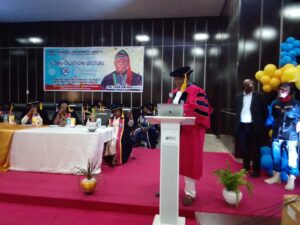 Addressing the graduands, Ochefu urged them to embrace diligence, respect, integrity, innovation and dedication as essential values for navigating the challenges of contemporary society.
In his welcome address, the Vice-Chancellor of the Federal University Lokoja (FUL), Professor Gbenga Ibileye, described the lecturer as a reservoir of knowledge whose academic prowess had nurtured and mentored a new generation of academics.