

Hon. E. D. Olufade and the Politics of Wisdom, Integrity, and Service to Humanity
Not every knowledgeable person is a sage. History and contemporary experience present examples of intellectuals who, despite their impressive knowledge, display a serious lack of wisdom. The absent-minded professor and the brilliant scientist who lacks sound judgement are familiar illustrations of this distinction. Knowledge and wisdom, therefore, do not always coexist; possessing and demonstrating both is a rare gift. Hon. E. D. Olufade is one of the fortunate few in whom these qualities find expression. To regard him as flawless, however, would be to elevate him to the revered position of the Creator, an expectation that does neither God nor Olufade himself any justice. Like every human being, he has his foibles and imperfections. Nevertheless, those who know him well can readily attest to his inherent goodness, sense of responsibility, integrity, and commitment to the welfare of others. His imperfections notwithstanding, Hon. Olufade remains a remarkable public servant whose record of achievement deserves recognition.
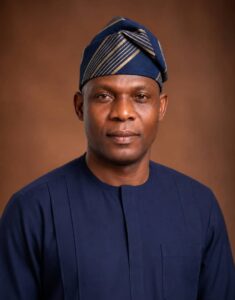 Perhaps one of the clearest expressions of his wisdom is his aversion to a political culture that thrives on unfulfilled promises. This position stems from his firm conviction that promises should never be made without a realistic understanding of one’s capacity to fulfil them. In his view, political promises should not rest on assumptions, speculation, or wishful thinking; rather, they should be grounded in a clear understanding of what the office one seeks can reasonably deliver. Otherwise, unforeseen circumstances may render such promises impossible to fulfil, leaving the promisor with the unenviable reputation of a liar. This conviction should not, however, be mistaken for an unwillingness to take responsibility or a lack of ambition. On the contrary, Hon. Olufade has consistently demonstrated a readiness to shoulder responsibility and translate it into practical action. His approach suggests that the credibility of leadership lies not in the volume of promises made but in the sincerity of one’s commitment and the tangible results achieved.
His record in public service provides a practical illustration of this philosophy. Consistent with his position, he presented no manifesto when he contested for the chairmanship of Ogori/Magongo Local Government Area. Yet, through the projects and programmes implemented during his administration, he established a record of service that continues to attract commendation. By virtue of the tangible achievements attributed to his tenure, he is regarded by his admirers as one of the most accomplished chairmen the local government has had. His experience offers an interesting perspective on the relationship between political rhetoric and public performance: leadership can be demonstrated not merely through elaborate campaign declarations but through purposeful initiatives that respond to the needs of the people.
Across education, healthcare, infrastructure, agriculture, transportation, employment, and community welfare, his administration pursued initiatives intended to improve the lives of residents. In healthcare, it renovated and extended the Basic Health Centre/NYSC Clinic in Magongo, which made it easy for the Olufade administration to, on a yearly basis, acquire NYSC doctors for the health centres through the NYSC Directorate, a tradition maintained through the years in office. The constant presence of a doctor at the centre greatly benefitted the Ogori/Magongo people and the general public by attracting people from neighbouring communities and travellers, as Ogori-Magongo L.G.A. serves as a gateway to northern and southern Nigeria. Also, it revamped an ambulance, rehabilitated the maternity centre at Ogori, and rehabilitated the central stores at General Hospital, Ogori. In infrastructure, it rehabilitated roads, culverts, and drainage systems and constructed markets and motor parks in both towns. These interventions addressed essential public needs and reflected an understanding that local development must begin with facilities and services that people depend on in their everyday lives.
As a former teacher and an ardent lover of education, education, in particular, occupied a prominent place in his administration’s development agenda. He established Ogori-Magongo Nursery and Primary School, Akpafa, temporarily located at NA, as well as another school at Akonogbolo to serve the educational needs of the Ebira and Fulani settlements. Given the remoteness of these settlements, access to basic education might otherwise have remained a considerable challenge. His commitment went beyond establishing schools to addressing the practical and financial barriers that prevent children from attending them. Pupils of Ogori-Magongo Nursery and Primary School, Akpafa, enjoyed free education, with school uniforms, textbooks, and exercise books provided at no cost. Transportation to and from school was also free. With the singular removal of these expenses, the initiative eased the financial burden on parents and guardians and made basic education more accessible to the children concerned.
His educational interventions extended to students in secondary schools and to individuals seeking higher education. He paid the WASSCE, NECO, and Junior Secondary Transition Examination (Junior WAEC) fees of students across the three schools, sponsored individuals to universities, polytechnics, and colleges of education, and donated funds to secondary schools for various projects, including repairs to the school bus at MCSS. He also gave local government employees opportunities to pursue further education while retaining their salaries throughout their studies, whether they were newly employed or already confirmed in service. These measures reflected a practical appreciation of education as an investment in human capacity, social advancement, and the future of the community. Rather than treating education as a privilege available only to those who could afford it, his interventions sought to widen access and create opportunities for individuals to improve their circumstances.
His administration also made substantial contributions to physical infrastructure. It facilitated the construction of Ojogbolo Bridge in Ogori and Akonogbolo Bridge in Magongo, improving essential connections within the two communities. It drilled most of the manual boreholes in both towns and provided wells in the ten wards, and at the cemeteries in both towns to ease the burden associated with interment. The administration also constructed Phases Three and Four of the local government secretariat, laid the foundation for the civic centre in Magongo, and oversaw the renovation of the Magistrate Court and the police station. In addition, it initiated, flagged off, and completed the pipe-borne water project in all the streets, which supplied water regularly throughout his tenure.
Transportation and public mobility also received attention. Olufade purchased new buses and rehabilitated old ones for the local government, strengthening its transport capacity. He equally provided buses for the school he established at Akpafa, enabling pupils to travel to and from school without charge. These arrangements complemented his wider efforts to improve access to public services, particularly for children and families who might otherwise have faced transportation difficulties. In the area of security, he purchased a brand-new ALCON Jeep for the police to support their operations within the local government area. This intervention complemented the renovation of the police station and reflected the importance he attached to protecting lives and property. His repair of the hospital ambulance similarly evidenced attention to emergency healthcare and the practical means required to transport patients when urgent medical assistance became necessary.
Agriculture formed another important part of his development initiatives. His administration rehabilitated and purchased tractors to support farming and agricultural activities, while he also established an oil palm plantation comprising more than one thousand palm trees. The plantation represents a significant investment in an agricultural resource with the potential for long-term productive value. These initiatives point to an appreciation of agriculture not merely as a means of subsistence but also as an avenue for strengthening livelihoods and supporting local economic development. The combination of investments in agricultural equipment with the establishment of a substantial palm plantation showed Olufade’s strong interest in productive activities that could extend beyond the immediate demands of public administration.
His concern for human development was matched by a commitment to employment and workers’ welfare. He employed qualified teachers for the schools he founded and over 300 people in the local government, and maintained the practice of paying workers their full salaries without arrears throughout his tenure, even when doing so required him to borrow money. This commitment is particularly significant when considered alongside his willingness to support employees pursuing further education without interrupting their salaries. These measures reflected his understanding that workers are not merely instruments of administration but individuals whose livelihoods, families, and future prospects depend on the responsible management of public resources. By supporting staff development, creating employment opportunities, and prioritising regular salary payments, he sought to advance both the welfare of workers and the institutional capacity of the local government.
His compassion was not confined to official responsibilities or institutional programmes. Following the devastating rainstorm of 2000, he personally purchased numerous bundles of zinc to assist in re-roofing houses damaged by the storm. He also personally facilitated the inter-service transfer of Ogori/Magongo indigenes to OMLGA, with the aim of promoting the area’s rapid development, at considerable personal expense. Among the beneficiaries were Mr Opara, Mr Boyi, and Mrs Orifunmishe, among others. These interventions reveal a willingness to extend assistance beyond the conventional demands of public office and to commit personal resources to matters he considered important to the welfare and advancement of his people.
His appreciation of community life extended beyond material development to the preservation and promotion of cultural heritage. Throughout his tenure, he made an annual financial contribution of 1 million naira to the Ovia Osese and Owiya Osese festivals, recognising their significance in the cultural identity and communal life of the people. He also purchased a vehicle for the Ologori, built the Traditional Council Secretary, supporting the traditional institution and its responsibilities. These contributions are important because community development cannot be measured solely by the construction of roads, bridges, schools, and other physical structures. It also involves sustaining the cultural institutions, festivals, and traditional relationships through which communities preserve their histories, express their collective identities, and maintain social cohesion. In this regard, Olufade’s interventions proved to an appreciation of the cultural foundations upon which community life rests.
Peace and unity between Ogori and Magongo were equally important dimensions of his leadership. He consistently advocated harmonious coexistence and intervened whenever communal clashes arose, seeking to prevent disagreements from deepening divisions between the two communities. Such efforts were important in a local government whose progress depends, in part, on the ability of its constituent communities to cooperate and pursue shared interests. His attention to security, including the provision of a vehicle for police operations, complemented this commitment to peace. His record of service, therefore, encompasses not only the provision of public infrastructure and social amenities but also efforts to preserve the relationships and conditions necessary for sustainable community development.
The breadth of Hon. E. D. Olufade’s contributions makes it difficult to exhaust his achievements in a single account. From the provision of free education, school uniforms, textbooks, exercise books, and transportation to the establishment of an oil palm plantation comprising more than one thousand trees; from the purchase of new buses and rehabilitation of old ones to the renovation of the Magistrate Court, police station, and hospital ambulance; and from the provision of a brand-new ALCON Jeep for the police to his contributions to the Ovia Osese and Owiya Osese festivals and the purchase of a vehicle for the Ologori, his record encompasses several dimensions of public and community life. His administration’s interventions addressed education, agriculture, healthcare, infrastructure, transportation, workers’ welfare, security, and cultural preservation. Considered collectively, these initiatives offer a broad picture of a leadership approach that sought to translate public responsibility into practical benefits.
In all, Hon. E. D. Olufade’s record invites reflection on the relationship between wisdom, integrity, and service in public life. His approach to political promises, his emphasis on practical achievements, and his contributions to the welfare of the people suggest a leadership philosophy in which responsibility should take precedence over rhetoric and public service should be measured, in part, by what it delivers. To acknowledge his achievements is not to claim that he is without imperfections, nor is it to suggest that every intervention was beyond criticism. Rather, it is to recognise the importance of assessing public figures fairly, with due regard for their actions, contributions, and the experiences of the communities they served.
If afforded another opportunity to serve, Olufade would bring to the task the experience accumulated through his previous tenure, together with the knowledge of local needs acquired in the course of his service. Such experience could provide a foundation for building on earlier achievements, addressing outstanding challenges, and responding more effectively to the changing needs of the people. His record remains a basis for reflecting on the value of responsible leadership: not leadership defined solely by what is promised, but leadership whose significance is ultimately revealed in the lives it touches, the opportunities it creates, and the institutions and communities it helps to strengthen.