

UNILORIN Gg MAX Farm Trains Graduates In Poultry Enterprise
* Produces 6,000 broilers
Stephen Olufemi Oni, Ilorin
The University of Ilorin Gg Max Farm has trained a new generation of potential graduate poultry entrepreneurs, while it also produced no fewer than 6,000 broiler chickens, less than three percent mortality.
It was the first eight-week Graduate Entrepreneurs Executive – Work, Earn, Learn and Live (GEE-WELL) programme of the University of Ilorin’s Gg Max Farm Limited.
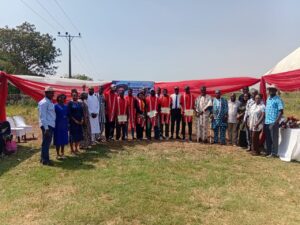 The initiative, developed by the Department of Animal Production in collaboration with UNILORIN Gg Max Poultry Farm Limited, is designed to equip graduates with practical agricultural skills and the business knowledge required to establish sustainable enterprises rather than depend solely on paid employment.
The pilot programme, which commenced on September 12, 2026, exposed participants to practical broiler production, management, animal health, processing, marketing and sales. It also provided opportunities for participants to acquire basic knowledge of layer production through exposure to the farm’s 30,000 laying birds.
Speaking on the initiative, the Chairman of Gg Max Farms Limited, Prof. Foluke Eunice Sola-Ojo, attributed its establishment to the University’s growing commitment to entrepreneurship development and graduate empowerment.
She commended the Vice-Chancellor, Prof. Wahab Olasupo Egbewole, SAN, whom she described as a great entrepreneur and an initiator of valuable programmes aimed at empowering students, enhancing their careers and preparing them for future opportunities.
Prof. Sola-Ojo explained that her involvement in the University’s entrepreneurship activities provided the experience that facilitated the introduction of GEE-WELL at the farm.
She described the programme as the first graduate trainee empowerment initiative in poultry production, where participants work, earn, learn and live within the University premises to ensure continuous and impactful training.
Beyond the production achievement recorded by the first cohort, she identified the completion of the trainees’ dormitory and provision of feeding arrangements as important areas requiring support. She therefore appealed to alumni, philanthropists and well-meaning Nigerians to support the initiative.
The importance of the programme to the University’s original agricultural development vision was further explained by Dr. A.T. Yusuff of the Department of Animal Production, who served on the Technical Committee during the project’s formative stage.
Tracing its development, he said the initiative began with the completion of a questionnaire, which subsequently evolved into a proposal and a competitive grant application involving several universities in Nigeria.
The University of Ilorin eventually emerged as the successful institution, becoming the first to secure a ₦600 million loan from the Central Bank of Nigeria (CBN) under the Tertiary Institution Poultry Revival Scheme (TIPRES).
Dr. Yusuff identified the financial sustainability framework and impact assessment plan as two major factors responsible for the success of the proposal.
According to him, the financial component established a systematic arrangement for income generation and expenditure, while the impact assessment framework addressed training, employment creation and economic transformation.
He explained that the GEE-WELL programme was not an entirely new addition to the project but formed part of the original proposal that qualified the University for the grant.
Dr. Yusuff described the graduation of the first cohort as the fulfilment of the vision of the founding fathers of UNILORIN Gg Max Farm Limited.
Going beyond the immediate benefits of poultry production, he challenged the beneficiaries to explore the entire broiler value chain, stressing that profitable agricultural entrepreneurship was not limited to raising birds from day-old chicks to market size.
He identified feed production as a major investment opportunity, noting that feeding accounted for approximately 70 per cent of the total cost of broiler production.
He encouraged interested graduates to explore alternative feed resources and formulation techniques that could reduce production costs and improve farmers’ profitability.
He also identified opportunities in the supply of day-old chicks and other production inputs, as well as the provision of services to address challenges encountered by poultry farmers, particularly during the early stages of production.
The speaker further highlighted processing and marketing as important areas where entrepreneurs could generate income without necessarily engaging directly in raising birds.
He explained that farmers sometimes invested substantial resources in labour, medication, vaccination and feeding but suffered losses when they encountered marketing difficulties or were compelled to sell below production costs to middlemen.
He therefore advised the graduands to consider opportunities before, during and after production, including processing and the distribution of finished poultry products to consumers.
Supporting the call for practical application of the training, the Deputy Director of the Technical and Entrepreneurship Centre (TEC), Dr. Saadat Yetunde Yusuf, who represented the Director, Prof. Adeniyi George, urged the beneficiaries to begin their businesses with manageable resources.
She advised them not to wait until they had enough capital to establish large poultry farms, explaining that they could start with between 100 and 200 birds and gradually expand.
Dr. Yusuf also stressed that financial discipline and proper record-keeping were essential to business survival and growth.
She urged the beneficiaries to maintain accurate business records and separate their personal bank accounts from their business accounts, explaining that proper financial documentation would improve their chances of accessing loans and grants.
She noted that financial institutions often required evidence of business transactions over a period of time before considering applications for financial assistance.
The representative of the Dean of the Faculty of Agriculture and Sub-Dean, Dr. Oluwasayomipe I. Alli, also encouraged the graduands to regard agriculture as a viable career and business opportunity.
She congratulated them on completing the training and commended Prof. Sola-Ojo, the Gg Max Board and Management team for the progress achieved within a relatively short period.
According to her, the acquisition of practical agricultural skills should not end with the presentation of certificates, as the beneficiaries could use their knowledge to establish businesses and generate additional income, whether or not they secured paid employment.
She also urged future participants to maximise the opportunity, respect their trainers and establish professional relationships that could benefit them beyond the training period.
A former Dean of the Faculty of Agriculture and the most senior Professor in the Department of Animal Production, Prof. Abiodun Adeloye, described the initiative as an effective response to the gap between classroom instruction and practical entrepreneurship.
He commended the University Management for providing an environment in which graduates could develop the skills required to become entrepreneurs and employers of labour.
Prof. Adeloye particularly appreciated Prof. Sola-Ojo, the Board, Management and staff of Gg Max Farm Limited, as well as the Department of Animal Production GEE-WELL technical team, for their contributions to the successful training of the beneficiaries.
He, however, advocated greater gender inclusion in subsequent cohorts, observing that the first graduating group appeared to be predominantly male.
He urged the beneficiaries to demonstrate integrity, dignity, innovation and honesty in their business dealings, noting that their conduct could influence others who might eventually learn from them.
Similarly, a former Director of TEC, University of Ilorin, mentor of the African Entrepreneurship Competition and member of the University’s Governing Council, Prof. U.A. Raheem, emphasised the need to sustain the commercial and training objectives of Gg Max Farm Limited.
He described GEE-WELL as an important development in the realisation of the farm’s original vision and an extension of the University’s graduate self-employment scheme.
Prof. Raheem, who attended the ceremony in support of the initiative of the Department of Animal Production, the farm and its Chairman, Prof. Sola-Ojo, expressed satisfaction with the progress recorded.
He observed that while the commercial component of the farm had gradually stabilised, the introduction of GEE-WELL had further strengthened its training mandate.
He stressed that the resources invested in the establishment should translate into tangible benefits through commercial activities, human capacity development and employment creation.
He also advised the farm’s Management to consider providing start-up assistance to future graduates and establishing a mechanism for monitoring their business progress.
The need to sustain the programme beyond the present cohort was also emphasised by Dr. K.M. Okukpe, who spoke on behalf of the Department of Animal Production.
He appreciated members of the Department for supporting the initiative and commended the Gg Max Farm Limited Board for strengthening its training component.
While acknowledging that access to finance remained a major challenge for young entrepreneurs, he encouraged the graduands to explore support from relatives and other sources, provided they demonstrated genuine commitment and willingness to utilise the resources productively.
He also advised participants of the new cohort to respect their trainers regardless of their positions or social status, stressing that humility was essential to effective learning.
Dr. Okukpe cautioned against allowing academic qualifications to become a barrier to acquiring practical knowledge from people with relevant experience.
He expressed the hope that GEE-WELL would remain sustainable beyond the tenure of the current Board, describing its continuity as important to the University’s entrepreneurship and agricultural development objectives.
The programme also attracted commendation from the Chairman of the African Support Bureau for Entrepreneurship (ASBE), Prof. P.O. Adeoye, a former Director of TEC and mentor at the African Entrepreneurship Competition, who was represented by Mr. Ajibola Oyewo, President of the University of Ilorin ASBE Students Club.
Prof. Adeoye described GEE-WELL as an innovative intervention that went beyond conventional training because participants were given the opportunity to learn and earn while their welfare was catered for throughout the programme.
Through his representative, he commended the Vice-Chancellor, Prof. Egbewole, for promoting entrepreneurship across the University’s units and creating opportunities for graduates to acquire practical business experience.
He also appreciated the Board and Management of UNILORIN Gg Max Limited for the initiative and congratulated the first cohort on completing the programme.
The Chairman of UNILORIN Gg Max Farm Limited also received commendation from the Olu of Iludun-Esie, Kwara State, Oba Kehinde Adeoti, who called for increased government support for agricultural entrepreneurship.
The royal father, who delivered a special prayer and goodwill message, urged the Federal Government to expand similar initiatives and provide agricultural business grants to graduates.
He observed that food production and protein supply remained essential to the population and that agriculture offered employment opportunities beyond what conventional government recruitment could provide.
Oba Adeoti also stressed the importance of assigning responsibilities to individuals according to their practical competence.
He encouraged the graduands to embrace prayer, patience, hard work and the practical application of their acquired knowledge, noting that these qualities were important for entrepreneurial success.
Dr. B.H. Ajao of the Department of Animal Production subsequently offered a special prayer, describing the programme as a laudable initiative deserving reasonable support from the Government and well-meaning Nigerians.
Meanwhile, the Captain of the graduating cohort, Bamigbade Khaleed Olalekan, described the training as an opportunity to acquire practical knowledge of broiler production, including bird rearing and poultry management.
He noted that poultry farming offered considerable market opportunities and could contribute to food security, economic development and improved livelihoods.
He expressed appreciation for being part of the pioneer cohort and pledged that the beneficiaries would apply the knowledge acquired to their personal growth and development.
The goodwill message on behalf of the trainers was delivered by Dr. Biola Salako, who described the eight-week experience as rewarding and memorable.
He congratulated the graduands and expressed the hope that they would make productive use of the knowledge acquired.
Dr. Salako suggested that future participants could be encouraged to register their businesses before completing the programme to strengthen their commitment to entrepreneurship.
He also disclosed that the second cohort had commenced training and was expected to graduate after completing its remaining four weeks.
Speaking on behalf of UNILORIN Gg Max Farm Limited, Mr. Abdulganiy Bashir congratulated the first cohort and wished the beneficiaries success in their future endeavours.
He described their eight-week stay on the farm as peaceful, adding that the staff enjoyed working with them.
He welcomed the second cohort and urged its members to maintain the positive relationship and work ethic demonstrated by the first group.
Prof. Sola-Ojo was highly commended by university officials, academics and other stakeholders for her leadership, humility and passion for youth empowerment, which have contributed to strengthening the commercial and training components of UNILORIN Gg Max Farm Limited, Amoyo.
The ceremony was attended by the Alamoyo of Amoyo, Alhaji Jamiu Ibrahim Oyewole; the Onigbade of Gbagede, Oba Abdulhakeem Kayode Ishola; and the Olu of Iludun-Esie, Oba Kehinde Adeoti.
Others included the Agricultural Science teacher of Flora International School, Lobalade Street, Tanke, Ilorin, Mr. Ojuerayetan Judah, and his students; members of the sawmill and tipper community of Amoyo, led by their Chairman, Alhaji Oshe-Olohun; Amoyo market women; the immediate past Chairman of the Board of UNILORIN Gg Max Farm, Prof. S.O. Salami; academic and non-academic staff of the University; representatives of university directorates; Board members of UNILORIN Gg Max Farm Limited; Management and staff of the farm; trainers; graduands and their relatives.
The graduation marked the completion of the pioneer training programme and another step towards the University’s efforts to strengthen agricultural entrepreneurship, practical skills acquisition, graduate self-reliance and community development.