

The Coalition for Better Kogi State (CBKS), a multi-party political coalition, has called for a shift of power to Kogi West Senatorial District in the 2027 governorship election, describing it as a matter of equity, justice and political inclusion.
The coalition also demanded an independent audit of alleged unpaid percentage salaries owed to civil servants, teachers and pensioners in the state, as well as an independent investigation into reported cases of missing persons, particularly in Kogi Central.
The demands were contained in a communiqué issued by the coalition at the end of an extraordinary multi-party stakeholders’ meeting held in Abuja on Monday, October 26, 2026, and signed by its Secretary, Dr Tom Ohikere.
The coalition, which said it comprised members of the All Progressives Congress (APC), Peoples Democratic Party (PDP), African Democratic Congress (ADC), Social Democratic Party (SDP), Accord Party, Labour Party (LP), All Progressives Grand Alliance (APGA) and non-partisan elders across the three senatorial districts, said ongoing reconciliation efforts in the state would fail without addressing what it described as three major unresolved issues.
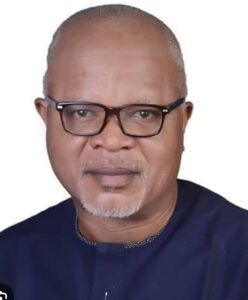 According to the communiqué, Kogi West has yet to produce an elected governor since the state’s creation in 1991, apart from the 51-day tenure of former Speaker of the State House of Assembly, Rt. Hon. Clarence Olafemi, who briefly served as acting governor.
It argued that Kogi East had produced governors for 17 years, while Kogi Central would have accounted for 12 years by 2028, leaving Kogi West without an elected governor in the state’s political history.
The coalition maintained that the perceived imbalance had deepened feelings of exclusion in the western senatorial district, insisting that the 2027 governorship election, which would lead to the inauguration of a new administration in January 2028, presented an opportunity to address the situation.
It declared that power rotation to Kogi West should be treated as a collective agenda for the entire state rather than the political demand of a single senatorial district.
On the second issue, the group questioned the alleged neglect of APC founding members who, according to it, invested personal resources in registering and building the party in Kogi State in 2013 and 2014, particularly ahead of the 2015 general elections.
It said the ongoing reconciliation efforts should address grievances among party members who believed they had been sidelined despite their contributions to the party’s growth.
The coalition also raised concerns over alleged outstanding percentage salary payments covering the period between 2016 and 2024, particularly affecting local government workers, primary school teachers and pensioners.
It alleged that although the state government now claimed to be paying full salaries, outstanding shortfalls accumulated during the period when workers received between 50 and 80 per cent of their salaries had yet to be comprehensively audited or settled.
The group, therefore, called for an independent audit of the alleged arrears by a committee comprising representatives of the Nigeria Labour Congress (NLC), Trade Union Congress (TUC), Institute of Chartered Accountants of Nigeria (ICAN) and Nigerian Bar Association (NBA).
It also demanded the publication of verified outstanding liabilities and a clear payment schedule to ensure that affected workers and pensioners received any amounts established to be owed to them.
The coalition argued that reconciliation could not be meaningful if workers continued to face uncertainty over alleged salary arrears, stressing that the process should begin with an assessment of outstanding obligations.
The third issue raised by the group concerned reported cases of missing persons, particularly in Kogi Central, which it described as a source of anxiety for affected families and communities.
It specifically cited the reported disappearance of Kabiru Ozi-onyene, whom it alleged was taken away in broad daylight in Okene, and called on the state government to publicly address the case.
The coalition, however, said it was presenting reports and concerns attributed to families and communities, rather than making unsubstantiated accusations against any individual or institution.
It demanded the establishment of an independent commission of inquiry into reported disappearances, with membership drawn from the NBA, National Human Rights Commission (NHRC), Christian Association of Nigeria (CAN), Jama’atu Nasril Islam (JNI), traditional rulers, civil society organisations and families of missing persons.
It further called for investigations capable of providing answers to affected families, appropriate remedies where wrongdoing was established, and safeguards against future occurrences.
The communiqué questioned whether the ongoing reconciliation process could adequately address the concerns of families whose relatives were reportedly missing, arguing that peace should be measured by citizens’ safety and the ability of authorities to investigate such cases transparently.
The coalition also expressed reservations about the effectiveness of an earlier reconciliation committee headed by Hon. Mohammed Asema Sadiq, Esq., which it said included former Speaker of the Kogi State House of Assembly, Rt. Hon. Abdullahi A. Bello, and Senator Natasha Akpoti-Uduaghan, who reportedly served as secretary at the time.
It questioned whether the committee’s recommendations had received adequate attention from the relevant authorities, warning that the perceived disregard for previous reconciliation efforts could undermine public confidence in the current process.
The group insisted that any fresh reconciliation initiative must be open to addressing difficult questions and recommending corrective measures, rather than pursuing a predetermined outcome.
Reaffirming its position on power rotation, the coalition said Kogi West’s demand for the governorship was linked to broader concerns about equity, workers’ welfare, accountability and public safety.
It argued that the district’s lack of an elected governor since the state’s creation had made the case for power rotation compelling, adding that a more inclusive political arrangement could help build trust across the three senatorial districts.
The coalition declared that power shift to Kogi West in 2028 was an irreversible goal to be pursued through democratic votes and support across party lines.
It maintained that ongoing state-sponsored reconciliation engagements would remain incomplete unless they addressed the alleged salary arrears, reported disappearances and historical grievances over political exclusion.
The communiqué was also addressed to political party chairmen in Kogi State, the Kogi State Council of Traditional Rulers, the NLC, TUC, NBA Lokoja Branch, the National Human Rights Commission and media organisations.