

Kogi Government Reaffirms Commitment to Open Governance at 2026 OGP Week Town Hall meeting
The Kogi State Government has reaffirmed its commitment to transparency, accountability, and citizen participation in governance as stakeholders gathered for a Town Hall Meeting to commemorate the 2026 Open Government Partnership (OGP) Week in the state.
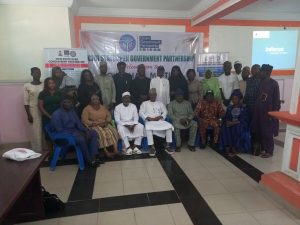
Speaking at the event, the Kogi State OGP Focal Person, Elder Ebenezer O. Bayode, described the Open Government Partnership as a global initiative aimed at making government more open, transparent, accountable, and responsive to the needs of citizens.
Bayode said Kogi State remains committed to the ideals of OGP through policies and programmes designed to improve governance and strengthen citizens’ trust in government institutions.
According to him, the commemoration of OGP Week provides an opportunity to increase public awareness of OGP principles, encourage citizens’ participation in governance, promote transparency and accountability in public institutions, and showcase the achievements recorded by the OGP Secretariat since its establishment.
He noted that the administration of Governor Alhaji Usman Ododo has demonstrated commitment to open governance through initiatives such as open budgeting, participatory procurement processes, improved access to information, and increased citizens’ engagement in governance.
“The Government has improved public service delivery by fostering public service improvement and private sector innovation, while also ensuring timely and transparent disclosure of budget documents and information,” he said.
Bayode further disclosed that the state government had established and funded the OGP Secretariat and approved the Kogi OGP State Action Plan I (SAP I), which focuses on fiscal transparency, right and access to information, service delivery, and extractive sector transparency.
He explained that the Secretariat had undertaken several activities, including the establishment of Technical Working Groups (TWGs) for thematic areas, review of the OGP work plan, development and launch of Service Charters in selected Ministries, Departments and Agencies (MDAs), legislative advocacy visits, and a one-day SAP I review meeting.
According to him, the introduction of Service Charters marked a major step towards improving accountability and citizen-focused service delivery in the state.
Bayode, however, identified challenges affecting the implementation of OGP initiatives to include limited funding, low participation from some government actors, bureaucratic bottlenecks, infrastructure deficits, and weak grassroots engagement.
He stressed the need for stronger collaboration, improved coordination, and greater commitment from stakeholders to deepen the practice of open governance in the state.
The OGP Focal Person also commended the collaboration between government, civil society organisations, and non-state actors, noting that such partnerships had improved stakeholder engagement, awareness creation, and support for service delivery reforms.
In their separate presentations, the OGP Non-State Co-Chair, Ambassador Idris Ozovehe Muraina, and the Chairman of the Kogi NGO Network, (KONGONET) Hamza Aliyu, called for greater citizens’ participation in governance processes.
They advocated a “bottom-to-top” budgeting approach that would allow citizens to contribute directly to budget planning and implementation, rather than the current top-down process.
Aliyu specifically urged the government to institutionalise periodic town hall meetings to enable citizens provide direct feedback on government policies and programmes.
He nevertheless commended the Kogi State Government for improvements in budget processes and access to information, stating that the administration had made significant progress in promoting transparency and openness in governance.