

The Forum of State Independent Electoral Commissions of Nigeria, FOSIECON, has called on state governments and Houses of Assembly to guarantee financial autonomy for State Independent Electoral Commissions, SIECs, through a statutory allocation of one percent of monthly local government allocations.
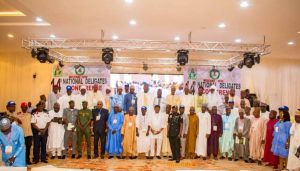 The demand was contained in a communique issued at the end of FOSIECON’s 14th National Delegates Conference held in Katsina from July 20 to 24, 2026, with the theme: “Understanding Voter Apathy in Nigeria’s Elections: Reality or Misconception.”
The conference brought together Chairmen and Members of SIECs, legal practitioners, academics, civil society, traditional institutions, INEC, security agencies, and development partners to deliberate on the future of local government elections in Nigeria.
FOSIECON observed that inadequate, irregular, and unpredictable funding remains the greatest challenge confronting SIECs, and it undermines institutional independence and the credibility of local government elections.
To address this, the Forum resolved that states should review their SIEC laws to create a First-Line Charge by setting aside 1% of monthly allocations due to LGAs for SIEC operations. It said sustainable funding would enable commissions to plan better, procure materials early, invest in technology, and expand voter education.
The Forum also called for periodic review of state electoral laws to align with the constitution, judicial pronouncements, and international standards, and urged states to domesticate progressive provisions of the Electoral Act where permissible.
On the conference theme, delegates concluded that declining voter turnout should not be reduced to citizens’ lack of interest.
According to the communique, voter apathy is driven by insecurity, misinformation, inadequate voter education, logistical challenges, political distrust, economic realities, and the perception that votes do not count. The Forum however noted that apathy is also a misconception in some cases, as many Nigerians are willing to vote when elections are transparent, peaceful, and credible.
It resolved that rebuilding public confidence requires collective action by SIECs, INEC, political parties, security agencies, CSOs, traditional and religious institutions, and the media. It further called for continuous voter education, use of technology, and secure environments free of intimidation and violence.
The conference expressed concern over the underrepresentation of women in local government councils due to socio-cultural norms, economic constraints, violence, and discriminatory party practices.
FOSIECON resolved that governments and parties should adopt deliberate policies to support women aspirants, reform nomination procedures to reduce financial barriers, and intensify public enlightenment to dismantle harmful stereotypes. It also called for leadership development and economic empowerment programmes for women.
The Forum reaffirmed that local governments can only deliver responsive governance when women, youths, and persons with disabilities have equal opportunities in leadership and decision-making.
Delegates formally adopted the philosophy of _”Re-imagining SIECs as Laboratories of Sub national Democratic Innovation – Why Not, If Not?” as a strategic pathway for reform. They urged every SIEC to become a centre of excellence in electoral innovation, digital transformation, civic education, and research.
Other resolutions include regular conduct of local government elections within legal timelines, investment in staff development and data management, combating misinformation, and strengthening internal democracy within political parties.
The conference commended development partners for their support and expressed appreciation to Governor Dikko Radda of Katsina State and the Katsina State Independent Electoral Commission for hosting the event.
In conclusion, FOSIECON reaffirmed its commitment to building strong, independent, and professionally competent SIECs capable of conducting free, fair, and inclusive local government elections.
It said the faithful implementation of the resolutions, especially statutory funding and democratic innovation, remains the surest path to restoring public confidence and consolidating grassroots democracy.
The communique was signed by FOSIECON National Chairman, Hon. Mamman Nda Eri, and General Secretary, Hon. Genevieve Osakwe, Esq.
KINDLY FIND BELOW THE COMMUNIQUE ISSUED AT THE END OF THE 14TH NATIONAL DELEGATES
CONFERENCE OF THE FORUM OF STATE INDEPENDENT ELECTORAL
COMMISSIONS OF NIGERIA (FOSIECON), HELD IN KATSINA, KATSINA
STATE, FROM 20TH – 24TH JULY, 2026.
Theme:
“Understanding Voter Apathy in Nigeria’s Elections: Reality or
Misconception.”
The Forum of State Independent Electoral Commissions of Nigeria (FOSIECON)
successfully held its 14th National Delegates Conference in Katsina State from 20th to 24th July, 2026. The Conference brought together Chairmen and Members of
State Independent Electoral Commissions (SIECs), Secretaries to the Commissions,
legal practitioners, academics, election management experts, development
partners, public officials, civil society organisations, traditional institutions, the media, and other stakeholders committed to strengthening democratic
governance in Nigeria.
The Conference provided a valuable platform for critical reflection on the present and future of local government elections in Nigeria. Through keynote addresses, technical sessions, panel discussions and interactive engagements, participants
examined a broad range of contemporary electoral issues, including the
implications of the Electoral Act (as amended) for State Independent Electoral
Commissions, institutional independence and financial autonomy, electoral law
reforms, technology-driven election management, voter education, inclusive
participation, democratic innovation, voter apathy, and socio-cultural barriers to women’s political representation in local government councils.
OBSERVATIONS
After extensive deliberations, the Conference observed that:
1. State Independent Electoral Commissions remain indispensable
constitutional institutions for sustaining democratic governance at the
grassroots and must be continually strengthened to discharge their
constitutional responsibilities professionally, independently, transparently
and impartially.
2. Inadequate, irregular and unpredictable funding remains one of the greatest
challenges confronting many SIECs, thereby undermining institutional
independence, long-term planning and the credibility of local government
elections.
3. The Conference noted that declining voter turnout should not simply be
interpreted as citizens’ lack of interest in elections. Rather, voter apathy is a complex phenomenon driven by several interconnected factors, including
insecurity, misinformation, inadequate voter education, logistical
challenges, political distrust, economic realities and the perception that votes
do not count. It concluded that voter apathy is both a reality and, in some
circumstances, a misconception, as many Nigerians remain willing to
participate whenever elections are transparent, peaceful and credible.
4. Participants recognised that rebuilding public confidence in elections
requires the collective efforts of SIECs, INEC, political parties, security agencies, civil society organisations, traditional and religious institutions,
development partners and the media.
5. The Conference observed that women remain significantly underrepresented in local government councils due to entrenched socio-cultural
norms, economic constraints, political violence, discriminatory practices,
inadequate party support and other systemic barriers, despite constitutional
guarantees of equality and Nigeria’s international commitments on gender
inclusion.
6. The Conference reaffirmed that local governments can only deliver responsive and inclusive governance when women, youths and persons
with disabilities are given equal opportunities to participate in leadership responsive and in decision making.
7. Participants endorsed the vision of “Re-imagining SIECs as Laboratories of
Subnational Democratic Innovation – Why Not, If Not?” as a strategic
pathway towards strengthening electoral administration and democratic
governance at the subnational level.
RESOLUTIONS
Consequently, the Conference unanimously resolved that:
1. State Governments and State Houses of Assembly should review their
respective SIEC Laws to guarantee sustainable financial autonomy through
a statutory First-Line Charge by setting aside One Percent (1%) of the
monthly allocation due to Local Governments for the operations of State
Independent Electoral Commissions.
2. Such sustainable funding should enable SIECs to strengthen institutional
capacity, improve long-term planning, procure election materials in good
time, invest in technology, expand voter education programmes, enhance
staff development and conduct elections without avoidable financial
constraints.
3. States should periodically review their Electoral Laws to ensure consistency
with constitutional provisions, relevant judicial pronouncements,
democratic realities and internationally accepted standards for election
administration.
4. States should, where constitutionally permissible, incorporate progressive
provisions of the Electoral Act (as amended) that enhance transparency,
accountability, technological innovation, inclusion and effective electoral
dispute management.
5. FOSIECON formally adopts the philosophy of “Re-imagining SIECs as Laboratories of Subnational Democratic Innovation – Why Not, If Not?” and
encourages every State Independent Electoral Commission to become a
centre of excellence in electoral innovation, digital transformation, civic education, research and institutional development.
6. FOSIECON should continue to serve as the foremost national platform for
peer learning, institutional collaboration, policy development, research and
the exchange of best practices among State Independent Electoral Commissions.
7. SIECs should deepen collaboration with INEC, security agencies, political
parties, civil society organisations, traditional and religious institutions,
development partners and the media in order to promote peaceful,
transparent, inclusive and credible local government elections.
8. Local government elections should continue to be conducted regularly and strictly within the timelines prescribed by law as an essential requirement
for deepening constitutional democracy at the grassroots.
9. SIECs should continue investing in staff development, election technology,
voter education, data management systems and institutional reforms that
strengthen public confidence in electoral administration.
10. Continuous voter education and civic engagement programmes should be institutionalised to improve citizens’ understanding of the electoral process,
increase participation and strengthen democratic culture.
11. SIECs should leverage technology, community engagement and strategic
partnerships to improve voter awareness and participation in local
government elections.
12. Governments and security agencies should provide a secure environment
that enables citizens to vote freely without fear, intimidation or violence.
13. Political parties should strengthen internal democracy, promote issue-based
campaigns, reduce political tensions and conduct themselves responsibly in
ways that restore public confidence in elections.
14. Electoral stakeholders should intensify efforts to combat misinformation
and disinformation capable of undermining public confidence in the
electoral process.
15. Election management bodies should continue to improve transparency,
professionalism, accountability and inclusiveness in order to reassure
citizens that every valid vote counts.
16. State Governments, political parties and all relevant stakeholders should adopt deliberate policies and practical measures to encourage and support qualified women to contest local government elections.
17. Political parties should reform their nomination procedures by eliminating
discriminatory practices, reducing financial barriers and creating greater opportunities for women aspirants.
18. Traditional rulers, religious leaders, educational institutions, civil society
organisations and the media should intensify public enlightenment
campaigns aimed at dismantling harmful socio-cultural stereotypes and
promoting wider acceptance of women in political leadership.
19. Governments at all levels should invest in leadership development, political
mentoring, capacity building and economic empowerment programmes
that enhance women’s competitiveness in elective politics.
20. Security agencies and electoral stakeholders should work together to
eliminate electoral violence, intimidation, harassment and other forms of
abuse that discourage women and other vulnerable groups from
participating in elections.
21. The Conference reaffirmed the importance of inclusive democracy and called for increased participation of women, young people and persons with
disabilities in every aspect of the electoral process as voters, candidates,
election officials and stakeholders.
22. Development partners and election support organisations were commended
for their invaluable technical and institutional support towards
strengthening electoral management bodies in Nigeria and were encouraged
to sustain these partnerships.
23. The Conference expressed profound appreciation to His Excellency, the
Executive Governor of Katsina State, for his unwavering support, warm hospitality and commitment to the successful hosting of the Conference.
Special appreciation was also extended to the Katsina State Independent
Electoral Commission, the Local Organising Committee, resource persons, development partners and all delegates whose dedication contributed
immensely to the success of the Conference.
24. The Conference called upon the Federal Government, State Governments,
the National Assembly, State Houses of Assembly, the Judiciary, INEC,
development partners, civil society organisations and all stakeholders to
support reforms that will strengthen the independence, financial
sustainability, operational effectiveness and institutional capacity of State Independent Electoral Commissions.
CONCLUSION
The 14th National Delegates Conference reaffirmed FOSIECON’s unwavering
commitment to building strong, independent, innovative and professionally
competent State Independent Electoral Commissions capable of conducting free,
fair, credible, inclusive and transparent local government elections.
The Conference further affirmed that restoring public confidence in elections
through institutional reforms, sustained voter education, credible electoral
processes, inclusive participation and democratic innovation remains the most
effective response to voter apathy and the surest path to strengthening grassroots
democracy in Nigeria.
The Conference also reaffirmed that increasing the participation and
representation of women in local government councils is essential to inclusive
governance, democratic consolidation and sustainable national development.
Participants expressed confidence that the faithful implementation of these resolutions, particularly the institutionalisation of sustainable statutory funding for SIECs and the repositioning of State Independent Electoral Commissions as
laboratories of subnational democratic innovation, will significantly strengthen
Nigeria’s electoral architecture, enhance citizens’ confidence in local government
elections and further consolidate constitutional democracy across the Federation.
Adopted unanimously this 24th day of July, 2026, at Katsina, Katsina State,
Nigeria.
HON. MAMMAN NDA ERI.
National Chairman
FOSIECON
HON. GENEVIEVE OSAKWE Esq.
General Secretary
FOSIECON