

The trigger for this article is the recent decision by Hon. Sam Aro to institute legal proceedings challenging the emergence of Distinguished Senator Steve Sunday Karimi as the All Progressives Congress (APC) candidate for the Kogi West Senatorial District.
Since the matter is now before a court of competent jurisdiction, I will deliberately refrain from discussing who won, who lost, or the merits of the case. Doing so could prejudice issues that are now the subject of litigation. I have confidence that the judiciary will discharge its constitutional responsibility fairly, and I urge all parties to respect whatever judgment the court eventually delivers.
My concern, therefore, is not the lawsuit itself. Rather, it is the political developments surrounding it and what, in my opinion, they reveal about the larger political calculations ahead of the 2027 elections in Kogi State.
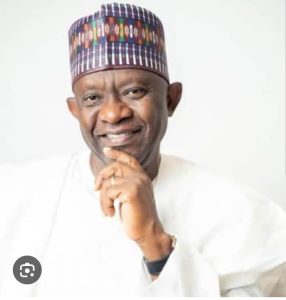 The sustained attacks on Distinguished Senator Steve Sunday Karimi have left many people asking one simple question: Why won’t they stop?
To the casual observer, these developments may appear to be ordinary political disagreements. However, for those who have carefully followed the political undercurrents in Kogi State, it is becoming increasingly evident that Senator Karimi is not the primary target. He has merely become the arena upon which a broader political contest is being played out.
The real battle, in my opinion, is against President Bola Ahmed Tinubu and the anticipated political realignment that could follow his re-election in 2027.
Those orchestrating these attacks understand the political implications of a Tinubu second term. They are aware that such an outcome could pave the way for Rt. Hon. James Abiodun Faleke to emerge as the APC governorship candidate in Kogi State. More importantly, they understand that a Faleke-led administration could significantly reshape governance in the state and potentially dismantle long-standing political structures.
That prospect, in my view, represents their greatest concern.
There also appears to be a calculated effort to sponsor candidates from Kogi West in order to fragment the voting strength of the district. However, there is already a growing cross-district alignment in support of Faleke. Reports suggest that over 90% support in Kogi West, 60% in Kogi Central, and 70% in Kogi East are increasingly leaning toward him. The Faleke movement in Kogi State, by all indications, is gaining significant momentum.
It is for this reason that I believe the opposition extends far beyond Senator Karimi. In my assessment, there is a quiet political disposition not to support the re-election of President Bola Ahmed Tinubu. Public declarations of loyalty to the APC, in some cases, appear to be driven more by political expediency than by genuine alignment.
This also explains why genuine reconciliation efforts within the APC may continue to face resistance. While many stakeholders are working toward strengthening party unity ahead of future elections, those pursuing alternative political interests have little incentive to allow full cohesion. Any reconciliation that strengthens the APC also strengthens President Tinubu’s re-election prospects and, by extension, increases the likelihood of Rt. Hon. James Abiodun Faleke emerging as the party’s governorship candidate in Kogi State. That is precisely the outcome they appear determined to avoid.
It is therefore not surprising that political discussions are gradually shifting toward the possibility of an alternative platform. Quiet consultations, strategic engagements, and behind-the-scenes negotiations are reportedly intensifying, with the objective of building a coalition capable of challenging the APC in the 2027 governorship election.
However, there appears to be a significant constraint to this ambition. Reports suggest that the numbers required to sustain such a broad political coalition may not yet be sufficient.
Another factor reshaping the political landscape is the gradual strengthening of Nigeria’s electoral process. Public confidence in electoral transparency is improving, and institutions are becoming increasingly resilient. If this trajectory continues, electoral outcomes will depend more on genuine popular support than on political manipulation that we have witnessed in the last ten years.
Interestingly, there appears to have been an attempt to test the old political structure during the recent APC Kogi West Senatorial primary election. The outcome, however, suggested that the old order may no longer be guaranteed. Whether or not one agrees with this interpretation, the episode appears to have accelerated the search for alternative political strategies.
This, in my view, also explains the expansion of political appointments.
While every administration has the constitutional responsibility to appoint qualified individuals into public office, such appointments also appear to serve a broader political purpose: the consolidation of networks that can be mobilized when necessary. This may not work for them. The appointees know where their people belong.
My advice to those receiving such appointments is simple. Accept every legitimate opportunity to serve the state and improve your personal welfare. Public appointments belong to the people and should never be rejected on purely political grounds. A government that could not create employment for a single graduate in the last 10 years should not receive accolade for emergency political appointment for selfish reasons
However, no appointment should compromise your conscience, your convictions, or your political independence.
Many citizens are still awaiting the large-scale employment opportunities they anticipated from the current administration. They also recall the prolonged civil service screening exercise under the administration of Governor Yahaya Bello, which, in the view of many, resulted in the loss of employment opportunities for a significant number of civil servants. These experiences remain fresh in public memory.
From all indications, the next phase of this political strategy, in my opinion, may involve the emergence of internal tensions within the APC, possibly in the coming months. Once sufficient political uncertainty is created, the network of appointees may then be mobilized into another platform to project the image of a mass political movement. It may not work for them. The appointees are not alienated from the struggle for a better Kogi.
The ultimate objective, according to this line of analysis, would be to present Governor Ahmed Usman Ododo on that platform for the 2027 governorship election, despite the considerable political challenges such a project would face.
Political drama may generate headlines, but it cannot substitute for genuine public legitimacy.
The people of Kogi State are more politically aware today than ever before. They can distinguish between appointments and performance, between propaganda and truth, and between temporary political arrangements and authentic leadership.
The 2027 governorship election will not merely be a contest among political parties. It will serve as a referendum on leadership, accountability, and the future direction of Kogi State.
Every politician is entitled to pursue legitimate political ambition. However, all ambitions must ultimately be subjected to the will of the electorate.
History has consistently demonstrated that no political calculation, however sophisticated, can permanently override the will of the people.
When the people eventually speak, no political strategy will be sufficient to silence their verdict.