

The Kogi State House of Assembly on Wednesday directed the managements of Prince Abubakar Audu University (PAAU), Anyigba, and Kogi State Polytechnic, Lokoja, to immediately suspend the implementation of the recently increased school fees following mounting concerns over the financial burden on students and their families.
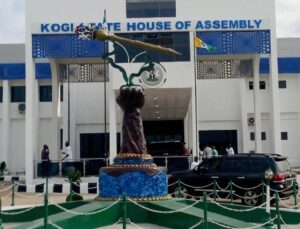 The directive followed a petition by a Lokoja-based non-governmental organisation, Mohab Care Foundation, which raised the alarm over the impact of the fee increases on parents, guardians and students, particularly those from disadvantaged backgrounds.
The petition, considered by the lawmakers on Wednesday, October 28, 2026, reportedly showed that tuition and other school charges at Kogi State Polytechnic had risen sharply, with fees previously pegged at about ₦32,000 for indigenes and ₦50,000 for non-indigenes now ranging from ₦105,000 to nearly ₦150,000 in some departments.
The increase represents more than 200 per cent in some cases, raising fears that students from low-income households could struggle to remain in school.
Mohab Care Foundation said the development was particularly troubling for vulnerable children whose families were already battling economic hardship.
“As an organisation working for the welfare of orphans, vulnerable children and disadvantaged families, we are deeply concerned about the consequences of this increase on children whose parents are already struggling,” the foundation stated in its petition.
The lawmakers, during deliberations, reportedly expressed concern over the magnitude of the increases, noting that many of them also sponsor students in the affected institutions and understand the financial pressure facing families.
To address the controversy, the Assembly resolved to invite the state Commissioner for Education, Hon. Wemi Jones, the Vice-Chancellor of PAAU, Prof. Usman Ogbo, and the Rector of Kogi State Polytechnic, Prof. Salihu Sanusi Avidime for a stakeholders’ meeting aimed at resolving the dispute and finding common ground.
The proposed interface is expected to provide an opportunity for the government and the institutions’ managements to explain the rationale behind the increases and consider possible relief for students and their sponsors.
The Assembly’s intervention comes amid growing concerns over the affordability of tertiary education, with many households struggling to meet the rising costs of education alongside other essential expenses.
Although the directive suspends implementation of the increased fees, the outcome of the planned stakeholders’ meeting is expected to determine the way forward for the affected institutions.
For students and parents, the immediate concern is whether the intervention will lead to a complete reversal of the increases or a review that makes the charges more affordable without undermining the institutions’ financial needs.