

THE Kogi NGOs Network (KONGONET) has called on the Kogi State Government to intensify efforts to address insecurity, poor road infrastructure, flooding, shortage of health workers, inadequate water supply and other challenges affecting residents across the state.
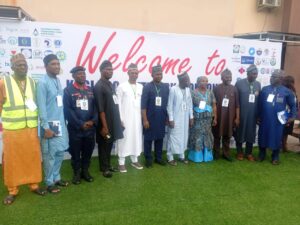 The Network made the call in a position paper presented at its 2026 Annual General Meeting held on Thursday, in Lokoja.
KONGONET acknowledged progress recorded by the state government in infrastructure, workers’ welfare, agriculture, health, education, security and open governance, but stressed that significant development gaps remained.
The organisation said the government must “acknowledge progress, speak honestly about the gaps and focus on practical solutions that improve everyday life.”
On security, KONGONET identified kidnapping, unsafe highways and threats to farming communities as major concerns. It called for stronger community-based early warning systems, improved protection of schools, farms and major roads, better coordination among security agencies and support for victims of insecurity.
The Network also urged the government to adopt a year-round approach to flood prevention, describing flooding as a predictable challenge in the state.
It recommended improved early-warning systems, drainage clearance, mapped evacuation routes, safe shelters, pre-positioned relief materials and flood-resilient public infrastructure.
On roads, KONGONET expressed concern over the condition of federal, state and rural roads, saying their deterioration was increasing transportation costs, damaging vehicles, delaying emergency services and making it difficult for farmers to transport their produce to markets.
It urged the state government to publish a road rehabilitation and maintenance programme, intensify engagement with the Federal Government on critical federal roads, improve routine maintenance of state and rural roads and prioritise agricultural feeder roads.
The organisation also raised concerns about the shortage of healthcare personnel, stressing that investment in health facilities would not translate into quality services without adequate manpower.
It called for accelerated implementation of the state’s health workforce recruitment and deployment plan, a statewide staffing audit and transparent recruitment based on verified needs, while advocating stronger incentives to attract and retain health professionals, particularly in rural communities.
KONGONET further called for full implementation of the Kogi State disability legal framework, greater inclusion of persons with disabilities in public employment and decision-making, and improved access to education, healthcare, public buildings, information and justice.
On mental health, the Network expressed concern over the growing number of persons with apparent mental-health conditions seen on the streets of Lokoja, Okene and other towns.
It urged authorities to adopt a humane approach that prioritises assessment, treatment, rehabilitation, social welfare support and family tracing where appropriate, rather than criminalising or simply removing vulnerable persons from public spaces. The organisation also identified potable water, sanitation and public transportation as areas requiring urgent attention.
It called for the completion and sustainable operation of the Greater Lokoja Water Works, expansion of water systems to underserved communities, improved waste collection and drainage maintenance, as well as the establishment of an affordable, properly managed and disability-inclusive mass transit system.
On governance and the forthcoming October 2026 Local Government elections, KONGONET urged stakeholders to ensure peaceful, inclusive and transparent polls.
The Network called for impartial security arrangements, credible election observation and accessible mechanisms for addressing complaints.
It also urged the state government to strengthen transparency in public expenditure by ensuring that citizens can easily access information on budget allocations, funds released, project locations, contractors and project completion status.
KONGONET further called for the completion and validation of the state’s Open Government Partnership commitments, improved procurement and project disclosure, stronger citizen monitoring and protection of civic space and media freedom.
The organisation maintained that the major challenge confronting Kogi State was not necessarily a lack of plans or policies, but effective implementation.
It therefore identified safer communities, flood prevention, road maintenance, recruitment and retention of health workers, disability inclusion, humane mental-health interventions, reliable water and sanitation, affordable public transportation, credible local government elections and stronger public accountability as key priorities.
The Network said civil society organisations must remain independent but constructive, base their interventions on evidence, recognise government achievements where they occur and accompany criticism with practical solutions.
“Development becomes meaningful when citizens can see it, use it and feel its impact in their everyday lives,” the Network stated.
Meanwhile, Kogi State Commissioner for Information and Communications, Kingsley Femi Fanwo, has called on KONGONET to deepen its advocacy for good governance, accountability and citizen participation in the state.
Fanwo, who was represented by the Director of News and Publications, Dr Atuluku Samuel, made the call while addressing the Annual General Meeting of KONGONET.
He commended the leadership and members of the network for their commitment to strengthening civil society and promoting democratic values.
The Commissioner described Non-Governmental Organisations as indispensable partners in a thriving democracy, noting that they provide platforms for citizens to participate actively in governance while promoting transparency, accountability and the protection of human rights.
According to him, NGOs also play a vital role in amplifying the voices of vulnerable groups and supporting community development initiatives.
Fanwo stressed that government could not, and should not, handle every aspect of development alone, adding that the expertise, community reach and independent perspectives of civil society organisations complement government efforts.
“Government cannot—and should not—do everything alone. The expertise, community reach and independent perspectives of NGOs complement the efforts of government and help to ensure that development programmes respond to the real needs of the people,” he said.
The Commissioner further highlighted the important role of NGOs in promoting access to information, civic education and constructive engagement between government and citizens.
He said a strong partnership between government and civil society would help build public trust and deepen democratic values across the state. Fanwo also pointed to the Kogi State Government’s acceptance of the Open Government Partnership as evidence of the administration’s willingness to collaborate with civil society organisations.
He urged KONGONET to continue to uphold professionalism, objectivity, accountability and constructive advocacy in carrying out its responsibilities. He said such collaboration would contribute to building a Kogi State where citizens are well-informed, actively involved in governance and confident that their voices are valued.
Fanwo congratulated KONGONET on its Annual General Meeting and expressed optimism that the gathering would renew the organisation’s commitment to democracy, good governance and sustainable development in Kogi State. The Network consequently called for a renewed partnership among government, citizens and civil society based on openness, evidence, respect and accountability.