

The growing public appeal for the return of former Nigerian President Goodluck Ebele Jonathan ahead of the 2027 presidential election did not emerge from political propaganda alone. It rose gradually from the frustration, hardship, and uncertainty that now dominate the daily lives of millions of Nigerians.
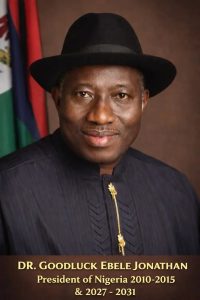 Across markets, transport parks, campuses, and workplaces, conversations about leadership frequently return to the years of the Jonathan administration. Many citizens who once criticized his government now speak of that period with renewed appreciation because they believe the country experienced greater economic relief, lower living costs, and a calmer political atmosphere than what currently exists.
Several Nigerians remember Jonathan as a leader who governed with restraint and civility. His administration maintained a political climate where opposition voices, journalists, and civil society groups operated with relative freedom without the level of tension that often defines modern political engagement in the country. Public perception of him changed significantly after he peacefully handed over power in 2015 following his electoral defeat.
I could recall with nostalgia how at a time when fears of post-election violence filled the nation while the ballots were being counted in 2015, Jonathan placed a historic telephone call to Late Muhammadu Buhari even before the final collation of results had ended. That singular act reduced national tension and prevented a possible political crisis. Many Nigerians still regard that decision as one of the finest democratic moments in the nation’s history because it brought to nullity, the prediction that Nigeria would break after the 2015 presidential election.
Another factor that endeared Jonathan to ordinary Nigerians was his calm disposition toward governance. Political observers often described him as a leader who listened more than he spoke. His public engagements rarely reflected bitterness, arrogance, or hostility toward critics. Citizens who interacted with his administration frequently believed there was room for dialogue and consultation. Such an approach created the impression of a government that understood the emotional and economic realities confronting ordinary people rather than merely governing from a distance.
Public sympathy for Jonathan also grew because many Nigerians now compare the economic realities of his era with current conditions. Food prices, transportation costs, school expenses, and household bills were considerably lower during his administration. The naira maintained stronger value against foreign currencies, and inflation levels did not suffocate purchasing power at the rate currently witnessed across the country. Even critics who faulted aspects of his administration now admit that living conditions were more manageable for low-income earners during that period.
The former president also earned admiration for maintaining relative national stability despite the security and political challenges confronting the country at the time. His government faced insurgency, economic pressure from falling oil prices, and heated political opposition. Yet, many Nigerians recall that businesses still operated with greater predictability and families could plan their finances without the level of economic fear presently affecting households. Such memories have continued to strengthen public calls for his possible return to national leadership.
One of the strongest comparisons often raised by citizens concerns the price of petrol. During Jonathan’s administration, petrol sold for about ₦87 per litre. Transport fares remained relatively affordable, and commercial activities moved with less pressure on consumers. Under the present administration of Bola Ahmed Tinubu, petrol prices climbed to between ₦900 and ₦1,300 per litre following the removal of fuel subsidy. The consequence immediately spread across every sector of the economy. Transportation costs multiplied rapidly, food distribution became more expensive, and small businesses faced rising operational costs that pushed many owners into severe hardship.
Rice prices also reflect the sharp economic contrast frequently discussed by Nigerians. A 50kg bag of local rice sold between ₦7,000 and ₦8,500 during the Jonathan years. Such pricing allowed many families to purchase food staples without exhausting monthly income. Current market realities place the same bag between ₦65,000 and ₦90,000 in many parts of the country. Salary earners now struggle to feed their households, while several families have reduced meal portions due to rising food inflation. Market traders repeatedly complain that consumers can no longer buy food items in quantities previously considered normal.
The cost of beans equally demonstrates the pressure confronting ordinary citizens today. During Jonathan’s tenure, a 100kg bag of beans averaged between ₦22,000 and ₦30,000. Current prices ranging from ₦90,000 to ₦120,000 have placed one of Nigeria’s major protein sources beyond the reach of many households. Nutrition experts and public commentators continue to warn about the health implications of worsening food affordability across low-income communities.
Bread, which remains one of the most consumed food items in urban areas, presents another striking comparison. A loaf sold for roughly ₦150 to ₦250 during the Jonathan administration. Presently, many bakeries sell the same product for ₦1,200 to ₦2,000 depending on size and location. Rising flour costs, transportation expenses, and electricity challenges continue to push prices upward. Many families that previously bought bread daily now treat it as an occasional purchase.
The situation surrounding cooking gas further deepens public frustration. A 12.5kg cylinder refill sold between ₦3,000 and ₦3,500 during Jonathan’s presidency. Current prices now fluctuate between ₦16,000 and ₦20,000 in several Nigerian cities. The increase has forced numerous households back to charcoal and firewood despite years of campaigns encouraging cleaner cooking methods. Economic hardship has therefore reversed progress in domestic energy usage for many low-income families.
Cement prices have become another major point of comparison in national discussions about living conditions and infrastructure costs. During Jonathan’s administration, a 50kg bag of cement sold for about ₦1,500 despite the existence of subsidy-related financial obligations in government spending. Current prices now range between ₦9,000 and ₦12,000 across many parts of Nigeria. The development has severely affected housing construction, rental costs, and private building projects. Artisans, contractors, and prospective homeowners continue to lament the increasing difficulty of completing construction projects under present economic conditions.
The price of eggs equally reflects the broader inflation crisis affecting consumers. A crate of eggs sold between ₦500 and ₦700 during the Jonathan years. Current prices now stand between ₦5,500 and ₦7,000 in many urban markets. Poultry farmers frequently attribute the increase to the rising cost of feed, transportation, and electricity. The result has been reduced access to affordable protein for millions of Nigerians.
Transportation costs remain another sensitive issue fueling nostalgia for Jonathan’s administration. Average city bus fares ranged between ₦50 and ₦100 during his tenure. Today, commuters in several Nigerian cities pay between ₦300 and ₦1,000 for similar routes depending on distance and fuel availability. Workers, students, and traders now spend a significant percentage of their earnings on transportation alone. Daily commuting has therefore become one of the harshest burdens confronting ordinary Nigerians.
Many citizens also compare the policy direction of both administrations. Jonathan’s government sustained petrol subsidy and implemented the Subsidy Reinvestment and Empowerment Programme, widely known as SURE-P. The programme supported public transportation, youth employment, maternal healthcare, and infrastructure development. Present realities under Tinubu reflect a different direction following subsidy removal, which triggered immediate increases in transport fares and living costs. Citizens who once criticized subsidy spending now argue that the removal came without sufficient protection for vulnerable Nigerians.
The YOUWIN programme introduced during Jonathan’s administration also remains one of the most frequently referenced youth empowerment initiatives in modern Nigerian history. Thousands of young entrepreneurs received grants and business support under the scheme. Combined with agricultural support programmes that assisted farmers with fertilizer access and farming inputs, many Nigerians believed the government actively attempted to stimulate small-scale economic growth. Presently, farmers and small business owners face rising production costs, unstable exchange rates, and limited access to affordable support systems. Numerous young Nigerians now express frustration over unemployment and shrinking economic opportunities.
Education and electricity policies also form part of the comparison frequently raised in public debates. Jonathan’s administration expanded federal universities and educational access in several states while electricity tariffs remained relatively moderate for many consumers. Current realities reveal increasing school expenses, rising electricity tariffs, and deep financial pressure on families struggling to educate their children. Parents now battle tuition fees, transportation costs, and unstable household income simultaneously.
Supporters of Jonathan often argue that his greatest strength was not perfection but empathy. Many Nigerians believed he governed with human feeling and understood the daily struggles of ordinary citizens. Public perception of him as a modest and approachable leader continues to shape the growing demand for his political return. Citizens who once dismissed his style of leadership as too soft now regard it as a rare example of humility and restraint in Nigerian politics.
The renewed calls for Jonathan’s return therefore extend beyond partisan politics. They reflect a wider national longing for economic relief, political stability, affordable living conditions, and leadership that many Nigerians consider more humane and people-oriented. Whether such appeals eventually translate into political reality ahead of 2027 remains uncertain. Yet the increasing nostalgia surrounding his administration reveals how deeply current economic hardship has reshaped public opinion across the country.
Nigeria’s political future will ultimately depend on the choices made by its citizens and political institutions. Nevertheless, the growing admiration for Goodluck Jonathan demonstrates how leadership style, economic conditions, and national temperament continue to influence public memory long after a government leaves office. In the minds of many Nigerians, Jonathan represents a period when life felt more affordable, governance appeared calmer, and ordinary people believed their struggles received greater attention from those in power.