

The 2027 Kogi East Senatorial race is still months away, but political signals across the nine LGAs are already pointing in one direction. If elections were held today, the African Democratic Congress, ADC, candidate QS Aminu Abubakar Suleiman would be the man to beat. While the All Progressives Congress, APC, remains locked in internal wrangling and the Peoples Democratic Party, PDP, struggles to present a unified front, Aminu is building momentum on message, grassroots reach, and credibility.
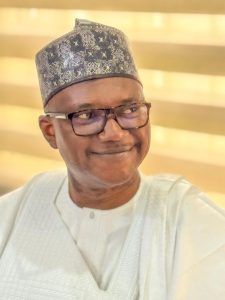 Kogi East politics has never been about party labels alone. It is about personalities, perception, and grassroots connection. And in 2027, those three factors are tilting the pendulum early toward the ADC.
QS Aminu Abubakar Suleiman enters the race with a clear advantage: focus. In a zone tired of empty rhetoric, his campaign is anchored on a development agenda that speaks to Kogi East’s immediate needs – security of life and property, agricultural value chains, youth employment, and stronger federal presence in infrastructure and education.
That clarity has given him early control of the conversation. While opponents debate party tickets, Aminu is already engaging communities, traditional institutions, youth groups, and professional bodies. The result is name recognition that cuts across Igala, Bassa, and other communities in Ankpa, Dekina, Idah, Ofu, Olamaboro, Omala, Bassa, Igalamela/Odolu, and Ibaji.
In politics, early structure often beats late money. Right now, Aminu has the structure. His popularity in the early days, before other candidates fully emerged, suggests he still commands a reservoir of goodwill. If votes are protected, he could pull off an upset, especially if the “Igala Agenda” politics that propelled Muritala Ajaka in the 2023 governorship race resurfaces. Kogi East voters have made it clear: they want representation, not imposition.
As Chairman of the Kaduna Electricity Distribution Company, constituents are watching to see if he translates that role into tangible support – transformers, electrification projects, and power interventions for a district that still struggles with electricity access. That institutional perch, combined with his reputation for intellect and composure, gives him political capital that is rare for a first-time Senate contender.
The APC’s challenge is self-inflicted. Incumbent Senator Jibrin Isah Echocho came into the Senate in 2019 with little political capital. Many recall that he was “dead and buried politically” until former Gov. Yahaya Bello intervened. His tenure has been marked by loyalty to the State power structure – a stance that earned him stability but also criticism for being too deferential to the ethnic bloc that controls power in Kogi and at the center.
His popularity once soared to the heavens in Igala land, only to collapse when he was seen as disconnected from the people. Now he appears to be finding his voice again, leveraging incumbency and structure. But two issues haunt his bid. First, he is locked in a protracted contest for the APC ticket with Security Chief Joe Erico. The perception of imposition around Erico has unsettled parts of the APC base. While Erico lacks the incumbent’s experience, the “puppet” narrative has opened space for challengers. Until the APC resolves this, it cannot present a coherent message or campaign machinery. Second, his quest for a third term is not carrying the people along, except for sympathy. Voters are asking what will be different this time. Incumbency without fresh delivery is a weak currency in Kogi East.
The APC still prides itself as the ruling party with “big names.” But as history in Kogi East has shown, names without unity rarely win when the chips are down. A fractured base against a focused ADC candidate is a losing formula.
The PDP’s permutations remain fluid. Alhaji Mohammed Abdullahi, “Elephant,” has the party structure and foundation to build on. Hussain Kashim Idris ‘HK’ – The Philanthropist Making Waves, CEO of Crush Café Abuja, represents a younger, upwardly mobile generation with drive and ambition. Both command respect in pockets of the district. But political watchers note they carry baggage of past negative insinuations, and their present conduct has not yet been fully activated to convince voters they are ready to represent one of Nigeria’s largest ethnic blocs. In a three-way contest, votes could scatter, but the central duel will likely remain Aminu vs whoever emerges from APC.
Three factors explain why Kogi East is tilting toward Aminu. First, voters are moving beyond party loyalty to demand solutions. Aminu’s messaging on security, jobs, and infrastructure aligns with voter anxiety across all nine LGAs. Second, ADC is presenting a clean slate – no internal battles, no factional lawsuits. That stability is attractive to voters and financiers who want certainty. The party also holds a quiet advantage following defections from APC and absorption of much of the PDP/SDP structures from 2023. Third, after years of “recycling,” the district is receptive to new leadership with technical competence and grassroots empathy. Aminu’s background and early engagements project both.
Potential is not votes. To convert goodwill into victory, observers say Aminu must expand visibility beyond his Idah base to engage Dekina, Bassa, and Ankpa federal constituencies. As Sullivan Enema notes, voters understand “the language of your immediate intervention.” Festival presence, empowerment, and visible projects will matter. His minimal visibility during the recent Eid el-Kabir festival was noted even though it has been addressed in recent time. For a constituency where Islamic support is strong, engagement during sacred periods is read as commitment. Critics also say he is boxed in by a circle of allies considered neophytes in Kogi East politics. He must tap native intelligence and broaden his circle to understand the district’s complex power blocs without being boxed in. As KAEDCO Chairman, constituents expect transformers, electrification, and empowerment that they can point to. “Who they have seen and whose impact they have felt” shapes thinking in Kogi East.
It is still early. Money, party structures, and federal influence will matter as politicking intensifies in the next seven months. But elections are won by narratives, and today the dominant narrative is change with competence. The ADC may be the dark horse if it channels the momentum from 2023. Jibrin Isah has incumbency and structure but must convince voters his next term will be different. HK and Elephant have youth and drive but must shed past baggage.
One lesson from 2023, according to Kogi East voters, is that 2027 will be less about violence and guns. The last cycle left scars, with fingers pointing at beneficiaries of a revolution who later abandoned their people. Voters are counting losses and demanding accountability.
For now, the race looks like a one-horse race. QS Aminu Abubakar Suleiman holds the ace. The question for other parties is not just who gets the ticket, but whether they can catch up to a candidate who is already campaigning while they are still counting delegates.
Kogi East voters will decide in 2027. But the early signals are clear: agenda, unity, and credibility are trumping incumbency. And on all three counts, ADC’s QS Aminu Abubakar Suleiman is ahead.