

The Planned Parenthood Federation of Nigeria (PPFN), has launched its one-year “EmpowerHer Project” in Kogi State with a pledge to reach 9,400 adolescents in and out of school with age-appropriate.
A high-level stakeholders engagement meeting was held on Tuesday in Lokoja on the implementation of Family Life and Health Education (FLHE).
Government officials, schools’ principals, civil society, development partners and other stakeholders, expressed their commitment to strengthening collaboration to deliver culturally sensitive reproductive health information and curb risks such as gender-based violence, early marriage, unwanted pregnancy and maternal mortality.
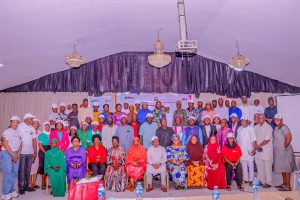 With the theme _“Strengthening Stakeholders’ Collaboration for Effective FLHE Implementation in Kogi State”, the engagement was convened to align strategies for integrating FLHE into schools and communities.
Speaking at the meeting, PPFN Executive Director, Dr Okai Aku, said adolescents need accurate information before forming beliefs based on misinformation. He noted that lack of proper knowledge contributes to health, psychological and social challenges.
Aku disclosed that the EmpowerHer Project, supported by the International Planned Parenthood Federation (IPPF), will train 20 teachers as Training of Trainers to cascade FLHE in schools and 20 youth peer educators through the Youth Action Movement (YAM).
He added that the project will directly reach 2,400 in-school adolescents and 7,000 out-of-school adolescents through digital platforms, WhatsApp and social media.
Also speaking, Mr. John Chawa, PPFN Manager for Advocacy and Resource Mobilization, said PPFN’s role is to provide technical support to complement, not duplicate, government efforts.
He noted that while PPFN operates in FCT, Kaduna and Oyo, Kogi is now included under EmpowerHer.
Representing the Kogi State Commissioner for Education, Hon. Wemi Jones, the Director of Planning, Research and Statistics, Dr. Elizabeth Ahman Animoku, described FLHE as more than a school subject.
She said it equips young people, parents and communities with life skills for informed decisions on health, relationships and the future.
Animoku stated that topics covered include puberty, hygiene, nutrition, reproductive health and responsible relationships.
She charged stakeholders to dispel myths and agree on practical, culturally respectful steps, adding that the Ministry welcomes PPFN’s technical support.
Giving an overview of the National FLHE Framework, Mrs Njideka Ogbuke, Director of School Health, Federal Ministry of Education, said FLHE is already mainstreamed into Basic Science, Social Studies and Biology.
She explained that since 2017, federal efforts have focused on teacher training, and partners like PPFN are critical to building capacity for behavior change and sustainability through clubs and societies.
From the civil society perspective, Chairperson of Kogi NGO Network, (KONGONET), Mr. Hamza Aliyu, pledged to mainstream FLHE messages into community advocacy.
He also expressed commitment of. KONGONET to advocating for budget implementation in the Ministries of Education and Health, and for the establishment of a dedicated FLHE Desk Officer in the Ministry of Education as done in other states.
Dr Habiba Suleiman, Executive Chairman of Kogi State Senior Secondary Education Board, said the engagement was about intensifying and modernizing FLHE delivery.
She stressed the need to leverage digital platforms and new communication channels to reach adolescents in IDP camps and hard-to-reach riverine areas to help them avoid unwanted pregnancies and unsafe abortions.
Participants agreed to strengthen collaboration between government, PPFN, NGOs and communities, build capacity of teachers and peer educators, expand reach to all adolescents, and ensure budgetary provisions for sustainability beyond the one-year project cycle.